Schoenoplectus pungens(Vahl) Palla

common threesquaresharp club-rush

WFO wfo-0000528016 Accepted WFO 2026-06 8 photographs CC BY

Plate 1 figs. a–h · 8 separate observations

Schoenoplectus pungens, photographed by Arnim Littek
fig. a Arnim Littek, CC BY 4.0 / 2022-04-24 / obs. 190241124

Every figure is a research-grade observation under CC0, CC BY or CC BY-SA, rehosted with the photographer’s name, the licence and the observation it came from. Photographs under a NonCommercial licence are excluded from this site and are never stored, which costs us a great many pictures and is not negotiable.

Native range 86 botanical countries
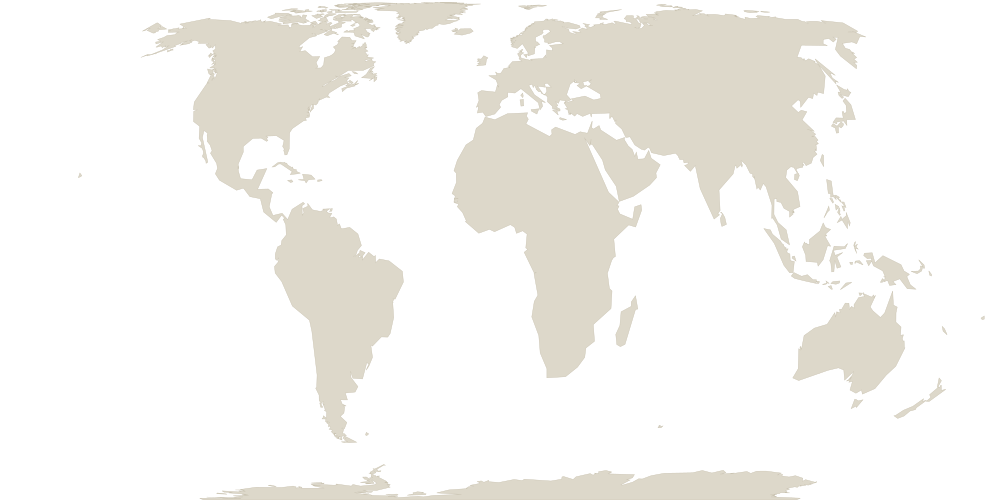
Regions where Schoenoplectus pungens is native: Chatham Is., New South Wales, New Zealand North, New Zealand South, South Australia, Tasmania, Victoria, Western Australia, Austria, France, Germany, Great Britain, Hungary, Italy, Netherlands, Poland, Portugal, Spain, Switzerland, Ukraine, Alabama, Alberta, Arizona, Arkansas, British Columbia, California, Colorado, Connecticut, Delaware, District of Columbia, Florida, Georgia, Idaho, Illinois, Indiana, Iowa, Kansas, Kentucky, Louisiana, Maine, Manitoba, Maryland, Massachusetts, Mexico Northeast, Mexico Northwest, Mexico Southwest, Michigan, Minnesota, Mississippi, Missouri, Montana, Nebraska, Nevada, New Hampshire, New Jersey, New Mexico, New York, Newfoundland, North Carolina, North Dakota, Ohio, Oklahoma, Ontario, Oregon, Pennsylvania, Québec, Rhode I., South Carolina, Tennessee, Texas, Utah, Vermont, Virginia, Washington, West Virginia, Wisconsin, Wyoming, Argentina Northeast, Argentina Northwest, Argentina South, Bolivia, Chile Central, Chile North, Dominican Republic, Peru, Uruguay New South WalesNew Zealand NorthNew Zealand SouthSouth AustraliaTasmaniaVictoriaWestern AustraliaAustriaFranceGermanyHungaryItalyNetherlandsPolandPortugalSpainSwitzerlandUkraineAlabamaAlbertaArizonaArkansasBritish ColumbiaCaliforniaColoradoConnecticutFloridaGeorgiaIdahoIllinoisIndianaIowaKansasKentuckyLouisianaMaineManitobaMarylandMassachusettsMexico NortheastMexico NorthwestMexico SouthwestMichiganMinnesotaMississippiMissouriMontanaNebraskaNevadaNew HampshireNew JerseyNew MexicoNew YorkNewfoundlandNorth CarolinaNorth DakotaOhioOklahomaOntarioOregonPennsylvaniaQuébecSouth CarolinaTennesseeTexasUtahVermontVirginiaWashingtonWest VirginiaWisconsinWyomingArgentina NortheastArgentina NorthwestArgentina SouthBoliviaChile CentralChile NorthDominican RepublicPeruUruguay Chatham Is.DelawareDistrict of ColumbiaRhode I.
Native distribution of Schoenoplectus pungens, after Kew’s World Checklist of Vascular Plants. Introduced, extinct and doubtful records are excluded, so this is where the plant is from, not everywhere it now grows. Regions too small to draw at this scale are marked with a dot.
RegionTDWG codeContinent
Alabama ALA NORTHERN AMERICA
Alberta ABT
Arizona ARI
Arkansas ARK
British Columbia BRC
California CAL
Colorado COL
Connecticut CNT
Delaware DEL
District of Columbia WDC
Florida FLA
Georgia GEO
Idaho IDA
Illinois ILL
Indiana INI
Iowa IOW
Kansas KAN
Kentucky KTY
Louisiana LOU
Maine MAI
Manitoba MAN
Maryland MRY
Massachusetts MAS
Mexico Northeast MXE
Mexico Northwest MXN
Mexico Southwest MXS
Michigan MIC
Minnesota MIN
Mississippi MSI
Missouri MSO
Montana MNT
Nebraska NEB
Nevada NEV
New Hampshire NWH
New Jersey NWJ
New Mexico NWM
New York NWY
Newfoundland NFL
North Carolina NCA
North Dakota NDA
Ohio OHI
Oklahoma OKL
Ontario ONT
Oregon ORE
Pennsylvania PEN
Québec QUE
Rhode I. RHO
South Carolina SCA
Tennessee TEN
Texas TEX
Utah UTA
Vermont VER
Virginia VRG
Washington WAS
West Virginia WVA
Wisconsin WIS
Wyoming WYO
Austria AUT EUROPE
France FRA
Germany GER
Great Britain GRB
Hungary HUN
Italy ITA
Netherlands NET
Poland POL
Portugal POR
Spain SPA
Switzerland SWI
Ukraine UKR
Argentina Northeast AGE SOUTHERN AMERICA
Argentina Northwest AGW
Argentina South AGS
Bolivia BOL
Chile Central CLC
Chile North CLN
Dominican Republic DOM
Peru PER
Uruguay URU
Chatham Is. CTM AUSTRALASIA
New South Wales NSW
New Zealand North NZN
New Zealand South NZS
South Australia SOA
Tasmania TAS
Victoria VIC
Western Australia WAU

Not drawn on the map: Great Britain. We hold no public-domain boundary for this region, so it is listed rather than guessed at.

Region boundaries approximated from Natural Earth (public domain) and mapped to TDWG World Geographical Scheme for Recording Plant Distributions (WGSRPD) level-3 botanical countries (Brummitt 2001). Indicative, not the official WGSRPD geometry.

Flowering 159 in flower of 289 examined

Proportion of examined Schoenoplectus pungens in flower, by month
Month In flower Examined Share 95% interval
Jan 10 26 38% 22% to 57%
Feb 14 23 61% 41% to 78%
Mar 6 20 30% 15% to 52%
Apr 4 16 25% 10% to 50%
May 19 31 61% 44% to 76%
Jun 25 35 71% 55% to 84%
Jul 24 31 77% 60% to 89%
Aug 9 23 39% 22% to 59%
Sep 0 9 0% 0% to 30%
Oct 8 20 40% 22% to 61%
Nov 24 29 83% 65% to 92%
Dec 16 26 62% 43% to 78%

Peak flowering in Nov. Each bar is the share of Schoenoplectus pungens observations in which someone actually recorded the reproductive state and found the plant in flower, not the raw number of flowering records. That distinction matters: people observe plants far more in spring than in winter, so a bare count of flowering records partly measures when people go outside. Dividing by the number examined removes that. 159 of 289 examined observations were in flower, every one of them research grade. The whisker on each bar is a 95% Wilson interval. This is still a global aggregate and not a forecast for your garden: the same species flowers on different dates in different hemispheres. Where a species has fewer than 30 flowering records we do not draw this chart at all. Computed from 10.15468/dl.cgje2x.

Also published as 51 synonyms

A synonym is not an error. It is a record of botanists disagreeing, in print, about where this plant belongs. Each of these was somebody’s considered answer.

  • Cyperus pungens (Vahl) Missbach & E.H.L.Krause
  • Eleocharis leptophylla Schult.
  • Eleogiton rothii Feurr.
  • Heleogiton pungens (Vahl) Rchb.
  • Heleogiton rothii Schur
  • Isolepis aristata C.Presl
  • Schoenoplectus americanus subsp. longispicatus (Britton) Soják
  • Schoenoplectus monophyllus (J.Presl & C.Presl) Soják
  • Schoenoplectus monophyllus subsp. conglomeratus (Kunth) Soják
  • Schoenoplectus pungens subsp. longispicatus (Britton) Á.Löve & D.Löve
  • Schoenoplectus pungens var. polyphyllus (Boeckeler) Dorn
  • Scirpus aggregatus Ruiz ex Boeckeler
  • Scirpus americanus f. cordilleranus Kük. & Barros
  • Scirpus americanus subsp. monophyllus (J.Presl & C.Presl) T.Koyama
  • Scirpus americanus var. conglomeratus (Kunth) T.Koyama
  • Scirpus americanus var. longebracteatus Barros & Osten
  • Scirpus americanus var. longisetis (Benth.) Beetle
  • Scirpus americanus var. longispicatus Britton
  • Scirpus americanus var. monophyllus (J.Presl & C.Presl) T.Koyama
  • Scirpus americanus var. polyphyllus (Boeckeler) Beetle
  • Scirpus americanus var. pungens (Vahl) Barros & Osten
  • Scirpus aristatus (C.Presl) K.Richt.
  • Scirpus badius J.Presl & C.Presl
  • Scirpus brevivaginatus Boeckeler

and 27 more.

Sourcesevery claim on this page

  1. World Flora Online Plant List. accepted name, authority, classification. CC0. Retrieved 2026-07-12.
  2. iNaturalist. photographs and flowering annotations, CC0 / CC BY / CC BY-SA only. per photograph. Retrieved 2026-06-27.
  3. Wikidata. common name (P1843), joined on the World Flora Online identifier (P7715). CC0. Retrieved 2026-07-13.
  4. Kew, World Checklist of Vascular Plants (WCVP v16). native distribution by TDWG level-3 botanical country, and life form. CC BY 3.0. Retrieved 2026-06-04.

We publish what we can source and we say so when we cannot. This page has no care advice and no toxicity claim, because we do not yet have those from a source we can cite.