Cyperus ligularisL.

Alabama swamp flatsedge

WFO wfo-0000376965 Accepted WFO 2026-06 8 photographs CC0 / CC BY / CC BY-SA

Plate 1 figs. a–h · 8 separate observations

Cyperus ligularis, photographed by Josiah Londerée
fig. a Josiah Londerée, CC BY 4.0 / 2022-05-08 / obs. 196158451

Every figure is a research-grade observation under CC0, CC BY or CC BY-SA, rehosted with the photographer’s name, the licence and the observation it came from. Photographs under a NonCommercial licence are excluded from this site and are never stored, which costs us a great many pictures and is not negotiable.

Native range 66 botanical countries
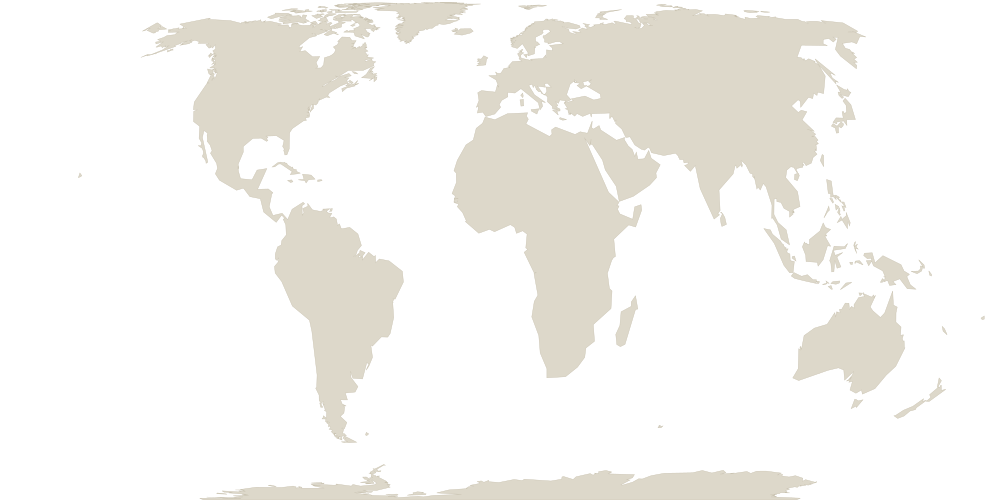
Regions where Cyperus ligularis is native: Aldabra, Benin, Cameroon, Cape Verde, Comoros, Congo, DR Congo, Equatorial Guinea, Gabon, Gambia, Ghana, Guinea, Guinea-Bissau, Gulf of Guinea Is., Ivory Coast, Liberia, Mauritania, Mozambique, Nigeria, Senegal, Seychelles, Sierra Leone, Togo, Alabama, Florida, Louisiana, Mexican Pacific Is., Mexico Gulf, Mexico Northeast, Mexico Northwest, Mexico Southeast, Mexico Southwest, Aruba, Bahamas, Belize, Bolivia, Brazil North, Brazil Northeast, Brazil West-Central, Cayman Is., Central American Pacific Is., Colombia, Costa Rica, Cuba, Dominican Republic, Ecuador, El Salvador, Galápagos, Guatemala, Haiti, Honduras, Jamaica, Leeward Is., Netherlands Antilles, Nicaragua, Panamá, Paraguay, Peru, Puerto Rico, Southwest Caribbean, Suriname, Trinidad-Tobago, Turks-Caicos Is., Venezuela, Venezuelan Antilles, Windward Is. BeninCameroonCongoDR CongoEquatorial GuineaGabonGambiaGhanaGuineaGuinea-BissauGulf of Guinea Is.Ivory CoastLiberiaMauritaniaMozambiqueNigeriaSenegalSierra LeoneTogoAlabamaFloridaLouisianaMexico GulfMexico NortheastMexico NorthwestMexico SoutheastMexico SouthwestBelizeBoliviaBrazil NorthBrazil NortheastBrazil West-CentralCentral American Pacific Is.ColombiaCosta RicaCubaDominican RepublicEcuadorEl SalvadorGuatemalaHaitiHondurasJamaicaNicaraguaPanamáParaguayPeruPuerto RicoSouthwest CaribbeanSurinameTrinidad-TobagoVenezuela AldabraCape VerdeComorosSeychellesArubaBahamasCayman Is.GalápagosLeeward Is.Netherlands AntillesTurks-Caicos Is.Venezuelan AntillesWindward Is.
Native distribution of Cyperus ligularis, after Kew’s World Checklist of Vascular Plants. Introduced, extinct and doubtful records are excluded, so this is where the plant is from, not everywhere it now grows. Regions too small to draw at this scale are marked with a dot.
RegionTDWG codeContinent
Aruba ARU SOUTHERN AMERICA
Bahamas BAH
Belize BLZ
Bolivia BOL
Brazil North BZN
Brazil Northeast BZE
Brazil West-Central BZC
Cayman Is. CAY
Central American Pacific Is. CPI
Colombia CLM
Costa Rica COS
Cuba CUB
Dominican Republic DOM
Ecuador ECU
El Salvador ELS
Galápagos GAL
Guatemala GUA
Haiti HAI
Honduras HON
Jamaica JAM
Leeward Is. LEE
Netherlands Antilles NLA
Nicaragua NIC
Panamá PAN
Paraguay PAR
Peru PER
Puerto Rico PUE
Southwest Caribbean SWC
Suriname SUR
Trinidad-Tobago TRT
Turks-Caicos Is. TCI
Venezuela VEN
Venezuelan Antilles VNA
Windward Is. WIN
Aldabra ALD AFRICA
Benin BEN
Cameroon CMN
Cape Verde CVI
Comoros COM
Congo CON
DR Congo ZAI
Equatorial Guinea EQG
Gabon GAB
Gambia GAM
Ghana GHA
Guinea GUI
Guinea-Bissau GNB
Gulf of Guinea Is. GGI
Ivory Coast IVO
Liberia LBR
Mauritania MTN
Mozambique MOZ
Nigeria NGA
Senegal SEN
Seychelles SEY
Sierra Leone SIE
Togo TOG
Alabama ALA NORTHERN AMERICA
Florida FLA
Louisiana LOU
Mexican Pacific Is. MXI
Mexico Gulf MXG
Mexico Northeast MXE
Mexico Northwest MXN
Mexico Southeast MXT
Mexico Southwest MXS

Not drawn on the map: Mexican Pacific Is.. We hold no public-domain boundary for this region, so it is listed rather than guessed at.

Region boundaries approximated from Natural Earth (public domain) and mapped to TDWG World Geographical Scheme for Recording Plant Distributions (WGSRPD) level-3 botanical countries (Brummitt 2001). Indicative, not the official WGSRPD geometry.

Flowering 35 in flower of 78 examined

Proportion of examined Cyperus ligularis in flower, by month
Month In flower Examined Share 95% interval
Jan 3 7 43% 16% to 75%
Feb 1 6 17% 3% to 56%
Mar 4 7 57% 25% to 84%
Apr 2 7 29% 8% to 64%
May 3 8 38% 14% to 69%
Jun 6 11 55% 28% to 79%
Jul 2 4 too few examined
Aug 3 5 60% 23% to 88%
Sep 3 5 60% 23% to 88%
Oct 2 4 too few examined
Nov 4 6 67% 30% to 90%
Dec 2 8 25% 7% to 59%

Peak flowering in Nov. Each bar is the share of Cyperus ligularis observations in which someone actually recorded the reproductive state and found the plant in flower, not the raw number of flowering records. That distinction matters: people observe plants far more in spring than in winter, so a bare count of flowering records partly measures when people go outside. Dividing by the number examined removes that. 35 of 78 examined observations were in flower, every one of them research grade. The whisker on each bar is a 95% Wilson interval. 2 months have fewer than 5 examined observations, so no proportion is drawn for them. This is still a global aggregate and not a forecast for your garden: the same species flowers on different dates in different hemispheres. Where a species has fewer than 30 flowering records we do not draw this chart at all. Computed from 10.15468/dl.cgje2x.

Also published as 21 synonyms

A synonym is not an error. It is a record of botanists disagreeing, in print, about where this plant belongs. Each of these was somebody’s considered answer.

  • Cyperus callophorus G.Mey.
  • Cyperus coriaceus Schrad.
  • Cyperus coriaceus (G.Mey.) Schrad. ex Nees
  • Cyperus dissolutus Kunth
  • Cyperus glandulosus (Bojer) Rolfe
  • Cyperus glaucoviridis Boeckeler
  • Cyperus ligularis var. spicatocapitatus (Steud.) Kük.
  • Cyperus punctatifolius Steud.
  • Cyperus rionensis Boeckeler
  • Cyperus rufus Kunth
  • Cyperus sintenisii Boeckeler
  • Cyperus spicato-rapitatus Steud.
  • Cyperus thyrsiflorus Boeckeler
  • Cyperus trigonus Boeckeler
  • Cyperus ubertus Willd. ex Link
  • Cyperus vulnerans Salzm. ex Schltdl.
  • Mariscus coriaceus G.Mey.
  • Mariscus dissolutus (Kunth) T.Koyama
  • Mariscus glandulosus Bojer
  • Mariscus ligularis (L.) Urb.
  • Mariscus rufus Kunth

Sourcesevery claim on this page

  1. World Flora Online Plant List. accepted name, authority, classification. CC0. Retrieved 2026-07-12.
  2. iNaturalist. photographs and flowering annotations, CC0 / CC BY / CC BY-SA only. per photograph. Retrieved 2026-06-27.
  3. Wikidata. common name (P1843), joined on the World Flora Online identifier (P7715). CC0. Retrieved 2026-07-13.
  4. Kew, World Checklist of Vascular Plants (WCVP v16). native distribution by TDWG level-3 botanical country, and life form. CC BY 3.0. Retrieved 2026-06-04.

We publish what we can source and we say so when we cannot. This page has no care advice and no toxicity claim, because we do not yet have those from a source we can cite.