Cyperus imbricatusRetz.

Shingle Flatsegdeshingle flatsedge

WFO wfo-0000375064 Accepted WFO 2026-06 8 photographs CC0 / CC BY

Plate 1 figs. a–h · 8 separate observations

Cyperus imbricatus, photographed by 葉子
fig. a 葉子, CC0 1.0 / 2022-03-05 / obs. 184841036

Every figure is a research-grade observation under CC0, CC BY or CC BY-SA, rehosted with the photographer’s name, the licence and the observation it came from. Photographs under a NonCommercial licence are excluded from this site and are never stored, which costs us a great many pictures and is not negotiable.

Native range 85 botanical countries
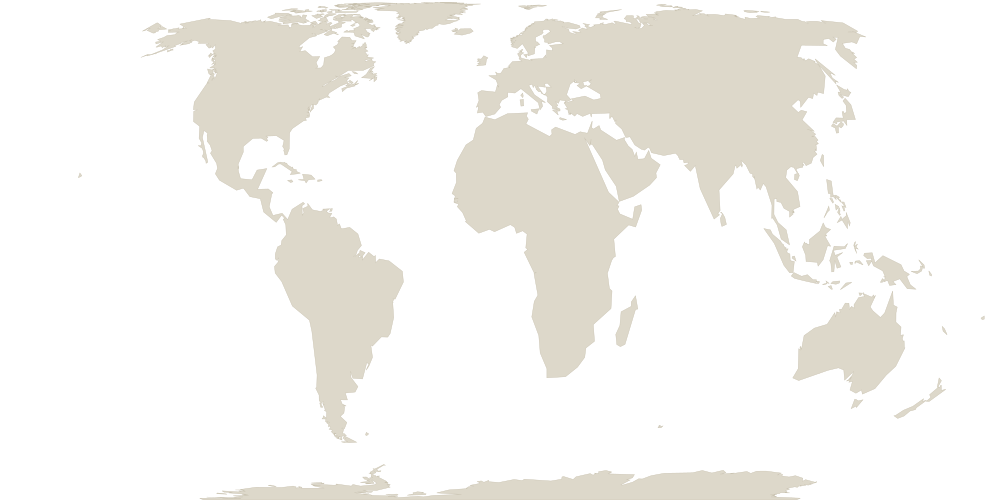
Regions where Cyperus imbricatus is native: Angola, Benin, Botswana, Burkina, Cameroon, Central African Republic, Chad, Congo, DR Congo, Egypt, Eswatini, Ethiopia, Gabon, Ghana, Guinea, Ivory Coast, KwaZulu-Natal, Liberia, Madagascar, Malawi, Mali, Mauritania, Mozambique, Namibia, Niger, Nigeria, Northern Provinces, Senegal, Seychelles, Sierra Leone, Sudan-South Sudan, Tanzania, Togo, Uganda, Zambia, Zimbabwe, Afghanistan, China Southeast, Hainan, Iran, Taiwan, Assam, Bangladesh, Borneo, India, Jawa, Laos, Lesser Sunda Is., Malaya, Maluku, Myanmar, Nepal, New Guinea, Pakistan, Philippines, Sulawesi, Sumatera, Thailand, Vietnam, Mexico Gulf, Mexico Southeast, Mexico Southwest, Belize, Bolivia, Brazil North, Brazil Northeast, Brazil West-Central, Colombia, Costa Rica, Cuba, Dominican Republic, Ecuador, El Salvador, Guatemala, Guyana, Haiti, Honduras, Jamaica, Nicaragua, Panamá, Peru, Puerto Rico, Trinidad-Tobago, Venezuela, Windward Is. AngolaBeninBotswanaBurkinaCameroonCentral African RepublicChadCongoDR CongoEgyptEswatiniEthiopiaGabonGhanaGuineaIvory CoastKwaZulu-NatalLiberiaMadagascarMalawiMaliMauritaniaMozambiqueNamibiaNigerNigeriaNorthern ProvincesSenegalSierra LeoneSudan-South SudanTanzaniaTogoUgandaZambiaZimbabweAfghanistanChina SoutheastHainanIranTaiwanAssamBangladeshBorneoIndiaJawaLaosLesser Sunda Is.MalayaMalukuMyanmarNepalNew GuineaPakistanPhilippinesSulawesiSumateraThailandVietnamMexico GulfMexico SoutheastMexico SouthwestBelizeBoliviaBrazil NorthBrazil NortheastBrazil West-CentralColombiaCosta RicaCubaDominican RepublicEcuadorEl SalvadorGuatemalaGuyanaHaitiHondurasJamaicaNicaraguaPanamáPeruPuerto RicoTrinidad-TobagoVenezuela SeychellesWindward Is.
Native distribution of Cyperus imbricatus, after Kew’s World Checklist of Vascular Plants. Introduced, extinct and doubtful records are excluded, so this is where the plant is from, not everywhere it now grows. Regions too small to draw at this scale are marked with a dot.
RegionTDWG codeContinent
Angola ANG AFRICA
Benin BEN
Botswana BOT
Burkina BKN
Cameroon CMN
Central African Republic CAF
Chad CHA
Congo CON
DR Congo ZAI
Egypt EGY
Eswatini SWZ
Ethiopia ETH
Gabon GAB
Ghana GHA
Guinea GUI
Ivory Coast IVO
KwaZulu-Natal NAT
Liberia LBR
Madagascar MDG
Malawi MLW
Mali MLI
Mauritania MTN
Mozambique MOZ
Namibia NAM
Niger NGR
Nigeria NGA
Northern Provinces TVL
Senegal SEN
Seychelles SEY
Sierra Leone SIE
Sudan-South Sudan SUD
Tanzania TAN
Togo TOG
Uganda UGA
Zambia ZAM
Zimbabwe ZIM
Belize BLZ SOUTHERN AMERICA
Bolivia BOL
Brazil North BZN
Brazil Northeast BZE
Brazil West-Central BZC
Colombia CLM
Costa Rica COS
Cuba CUB
Dominican Republic DOM
Ecuador ECU
El Salvador ELS
Guatemala GUA
Guyana GUY
Haiti HAI
Honduras HON
Jamaica JAM
Nicaragua NIC
Panamá PAN
Peru PER
Puerto Rico PUE
Trinidad-Tobago TRT
Venezuela VEN
Windward Is. WIN
Assam ASS ASIA-TROPICAL
Bangladesh BAN
Borneo BOR
India IND
Jawa JAW
Laos LAO
Lesser Sunda Is. LSI
Malaya MLY
Maluku MOL
Myanmar MYA
Nepal NEP
New Guinea NWG
Pakistan PAK
Philippines PHI
Sulawesi SUL
Sumatera SUM
Thailand THA
Vietnam VIE
Afghanistan AFG ASIA-TEMPERATE
China Southeast CHS
Hainan CHH
Iran IRN
Taiwan TAI
Mexico Gulf MXG NORTHERN AMERICA
Mexico Southeast MXT
Mexico Southwest MXS

Region boundaries approximated from Natural Earth (public domain) and mapped to TDWG World Geographical Scheme for Recording Plant Distributions (WGSRPD) level-3 botanical countries (Brummitt 2001). Indicative, not the official WGSRPD geometry.

Flowering 47 in flower of 58 examined

Proportion of examined Cyperus imbricatus in flower, by month
Month In flower Examined Share 95% interval
Jan 0 0 too few examined
Feb 1 1 too few examined
Mar 1 1 too few examined
Apr 6 6 100% 61% to 100%
May 2 3 too few examined
Jun 1 1 too few examined
Jul 10 10 100% 72% to 100%
Aug 1 1 too few examined
Sep 9 10 90% 60% to 98%
Oct 10 13 77% 50% to 92%
Nov 2 5 40% 12% to 77%
Dec 4 7 57% 25% to 84%

Peak flowering in Apr. Each bar is the share of Cyperus imbricatus observations in which someone actually recorded the reproductive state and found the plant in flower, not the raw number of flowering records. That distinction matters: people observe plants far more in spring than in winter, so a bare count of flowering records partly measures when people go outside. Dividing by the number examined removes that. 47 of 58 examined observations were in flower, every one of them research grade. The whisker on each bar is a 95% Wilson interval. 6 months have fewer than 5 examined observations, so no proportion is drawn for them. This is still a global aggregate and not a forecast for your garden: the same species flowers on different dates in different hemispheres. Where a species has fewer than 30 flowering records we do not draw this chart at all. Computed from 10.15468/dl.cgje2x.

Also published as 33 synonyms

A synonym is not an error. It is a record of botanists disagreeing, in print, about where this plant belongs. Each of these was somebody’s considered answer.

  • Cyperus anabaptistus Steud.
  • Cyperus biceps Vahl
  • Cyperus campestris Schrad. ex Nees
  • Cyperus confertiflorus Schult.
  • Cyperus dense-spicatus Hayata
  • Cyperus densiflorus Link
  • Cyperus densispicatus Cherm.
  • Cyperus digitatus Nees
  • Cyperus flexifolius Boeckeler
  • Cyperus imbricatus subsp. elongatus (Boeckeler) T.Koyama
  • Cyperus imbricatus var. capitatus (Boeckeler) Kük.
  • Cyperus imbricatus var. dense-spicatus (Hayata) Ohwi
  • Cyperus imbricatus var. densispicatus (Hayata) Ohwi
  • Cyperus imbricatus var. elongatus (Boeckeler) Kük.
  • Cyperus imbricatus var. imbricatus
  • Cyperus imbricatus var. minor (Boeckeler) Kük.
  • Cyperus imbricatus var. multiflorus Kük.
  • Cyperus imbricatus var. viridispicatus (Boeckeler) Kük.
  • Cyperus involucratus Poir.
  • Cyperus macrosciadion Steud.
  • Cyperus mediorubescens Hayata
  • Cyperus obscurus Nees
  • Cyperus radiatus Vahl
  • Cyperus radiatus var. capitatus Boeckeler

and 9 more.

Sourcesevery claim on this page

  1. World Flora Online Plant List. accepted name, authority, classification. CC0. Retrieved 2026-07-12.
  2. iNaturalist. photographs and flowering annotations, CC0 / CC BY / CC BY-SA only. per photograph. Retrieved 2026-06-27.
  3. Wikidata. common name (P1843), joined on the World Flora Online identifier (P7715). CC0. Retrieved 2026-07-13.
  4. Kew, World Checklist of Vascular Plants (WCVP v16). native distribution by TDWG level-3 botanical country, and life form. CC BY 3.0. Retrieved 2026-06-04.

We publish what we can source and we say so when we cannot. This page has no care advice and no toxicity claim, because we do not yet have those from a source we can cite.