Veronica catenataPennell

Pink Water-speedwellpink water-speedwell

WFO wfo-0000419450 Accepted WFO 2026-06 8 photographs CC0 / CC BY / CC BY-SA

Plate 1 figs. a–h · 8 separate observations

Veronica catenata, photographed by mark-groeneveld
fig. a mark-groeneveld, CC BY 4.0 / 2021-07-17 / obs. 144727768

Every figure is a research-grade observation under CC0, CC BY or CC BY-SA, rehosted with the photographer’s name, the licence and the observation it came from. Photographs under a NonCommercial licence are excluded from this site and are never stored, which costs us a great many pictures and is not negotiable.

Native range 70 botanical countries
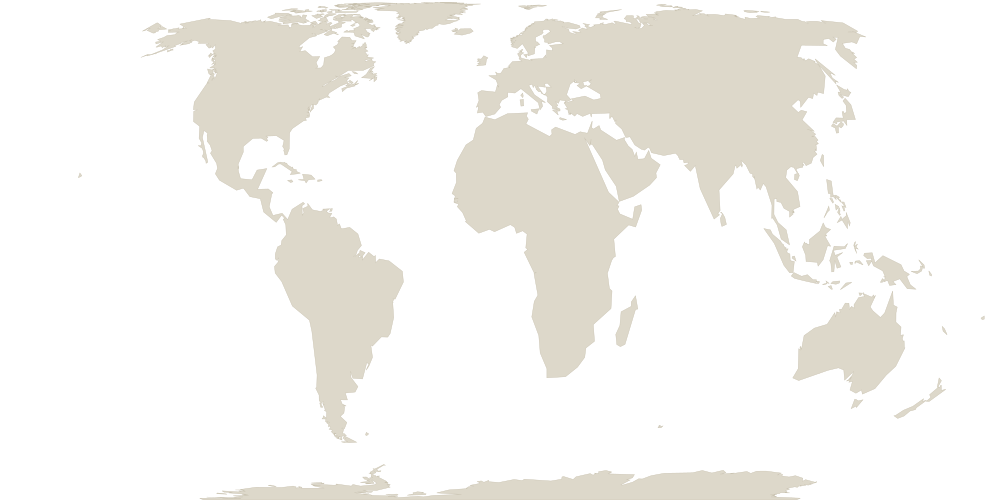
Regions where Veronica catenata is native: Algeria, Azores, Egypt, Libya, Morocco, Tunisia, North Caucasus, Albania, Austria, Baltic States, Belarus, Belgium, Bulgaria, Czechia-Slovakia, Denmark, East European Russia, France, Germany, Great Britain, Greece, Hungary, Ireland, Italy, Netherlands, Northwest European Russia, NW. Balkan Pen., Poland, Portugal, Romania, Spain, Sweden, Switzerland, Ukraine, Alberta, British Columbia, California, Idaho, Illinois, Indiana, Iowa, Kansas, Kentucky, Maine, Manitoba, Massachusetts, Michigan, Minnesota, Missouri, Montana, Nebraska, Nevada, New Mexico, New York, North Dakota, Ohio, Oklahoma, Ontario, Oregon, Pennsylvania, Québec, Saskatchewan, South Dakota, Tennessee, Texas, Vermont, Virginia, Washington, West Virginia, Wisconsin, Wyoming AlgeriaEgyptLibyaMoroccoTunisiaNorth CaucasusAlbaniaAustriaBaltic StatesBelarusBelgiumBulgariaCzechia-SlovakiaDenmarkEast European RussiaFranceGermanyGreeceHungaryIrelandItalyNetherlandsNorthwest European RussiaNW. Balkan Pen.PolandPortugalRomaniaSpainSwedenSwitzerlandUkraineAlbertaBritish ColumbiaCaliforniaIdahoIllinoisIndianaIowaKansasKentuckyMaineManitobaMassachusettsMichiganMinnesotaMissouriMontanaNebraskaNevadaNew MexicoNew YorkNorth DakotaOhioOklahomaOntarioOregonPennsylvaniaQuébecSaskatchewanSouth DakotaTennesseeTexasVermontVirginiaWashingtonWest VirginiaWisconsinWyoming Azores
Native distribution of Veronica catenata, after Kew’s World Checklist of Vascular Plants. Introduced, extinct and doubtful records are excluded, so this is where the plant is from, not everywhere it now grows. Regions too small to draw at this scale are marked with a dot.
RegionTDWG codeContinent
Alberta ABT NORTHERN AMERICA
British Columbia BRC
California CAL
Idaho IDA
Illinois ILL
Indiana INI
Iowa IOW
Kansas KAN
Kentucky KTY
Maine MAI
Manitoba MAN
Massachusetts MAS
Michigan MIC
Minnesota MIN
Missouri MSO
Montana MNT
Nebraska NEB
Nevada NEV
New Mexico NWM
New York NWY
North Dakota NDA
Ohio OHI
Oklahoma OKL
Ontario ONT
Oregon ORE
Pennsylvania PEN
Québec QUE
Saskatchewan SAS
South Dakota SDA
Tennessee TEN
Texas TEX
Vermont VER
Virginia VRG
Washington WAS
West Virginia WVA
Wisconsin WIS
Wyoming WYO
Albania ALB EUROPE
Austria AUT
Baltic States BLT
Belarus BLR
Belgium BGM
Bulgaria BUL
Czechia-Slovakia CZE
Denmark DEN
East European Russia RUE
France FRA
Germany GER
Great Britain GRB
Greece GRC
Hungary HUN
Ireland IRE
Italy ITA
Netherlands NET
Northwest European Russia RUW
NW. Balkan Pen. YUG
Poland POL
Portugal POR
Romania ROM
Spain SPA
Sweden SWE
Switzerland SWI
Ukraine UKR
Algeria ALG AFRICA
Azores AZO
Egypt EGY
Libya LBY
Morocco MOR
Tunisia TUN
North Caucasus NCS ASIA-TEMPERATE

Not drawn on the map: Great Britain. We hold no public-domain boundary for this region, so it is listed rather than guessed at.

Region boundaries approximated from Natural Earth (public domain) and mapped to TDWG World Geographical Scheme for Recording Plant Distributions (WGSRPD) level-3 botanical countries (Brummitt 2001). Indicative, not the official WGSRPD geometry.

Flowering 129 in flower of 142 examined

Proportion of examined Veronica catenata in flower, by month
Month In flower Examined Share 95% interval
Jan 1 1 too few examined
Feb 0 0 too few examined
Mar 2 4 too few examined
Apr 7 8 88% 53% to 98%
May 18 21 86% 65% to 95%
Jun 24 27 89% 72% to 96%
Jul 27 27 100% 88% to 100%
Aug 27 28 96% 82% to 99%
Sep 13 16 81% 57% to 93%
Oct 5 5 100% 57% to 100%
Nov 4 4 too few examined
Dec 1 1 too few examined

Peak flowering in Jul. Each bar is the share of Veronica catenata observations in which someone actually recorded the reproductive state and found the plant in flower, not the raw number of flowering records. That distinction matters: people observe plants far more in spring than in winter, so a bare count of flowering records partly measures when people go outside. Dividing by the number examined removes that. 129 of 142 examined observations were in flower, every one of them research grade. The whisker on each bar is a 95% Wilson interval. 5 months have fewer than 5 examined observations, so no proportion is drawn for them. This is still a global aggregate and not a forecast for your garden: the same species flowers on different dates in different hemispheres. Where a species has fewer than 30 flowering records we do not draw this chart at all. Computed from 10.15468/dl.cgje2x.

Also published as 15 synonyms

A synonym is not an error. It is a record of botanists disagreeing, in print, about where this plant belongs. Each of these was somebody’s considered answer.

  • Veronica anagallis-aquatica prol. aquatica (Nyman) Rouy
  • Veronica anagallis-aquatica subsp. aquatica Nyman
  • Veronica anagallis-aquatica subsp. aquatica Bernh. ex Nyman
  • Veronica anagallis-aquatica subsp. pallidiflora Čelak.
  • Veronica anagallis-aquatica var. glandulosa Farw.
  • Veronica aquatica Bernh.
  • Veronica aquatica f. laevipes Beck
  • Veronica catenata var. catenata
  • Veronica catenata var. glandulosa (Farw.) Pennell
  • Veronica comosa var. glaberrima (Pennell) B.Boivin
  • Veronica comosa var. glandulosa (Farw.) B.Boivin
  • Veronica connata subsp. glaberrima Pennell
  • Veronica connata var. glaberrima (Pennell) Fassett
  • Veronica micromera Wooton & Standl.
  • Veronica salina f. laevipes (Beck) Fernald

Sourcesevery claim on this page

  1. World Flora Online Plant List. accepted name, authority, classification. CC0. Retrieved 2026-07-12.
  2. iNaturalist. photographs and flowering annotations, CC0 / CC BY / CC BY-SA only. per photograph. Retrieved 2026-06-27.
  3. Wikidata. common name (P1843), joined on the World Flora Online identifier (P7715). CC0. Retrieved 2026-07-13.
  4. Kew, World Checklist of Vascular Plants (WCVP v16). native distribution by TDWG level-3 botanical country, and life form. CC BY 3.0. Retrieved 2026-06-04.

We publish what we can source and we say so when we cannot. This page has no care advice and no toxicity claim, because we do not yet have those from a source we can cite.