Triumfetta rhomboideaJacq.

diamond burbarkdiamond burrbark

WFO wfo-0000457668 Accepted WFO 2026-06 8 photographs CC0 / CC BY-SA

Plate 1 figs. a–h · 8 separate observations

Triumfetta rhomboidea, photographed by Steve Fitzgerald
fig. a Steve Fitzgerald, CC BY-SA 4.0 / 2022-05-17 / obs. 198210378

Every figure is a research-grade observation under CC0, CC BY or CC BY-SA, rehosted with the photographer’s name, the licence and the observation it came from. Photographs under a NonCommercial licence are excluded from this site and are never stored, which costs us a great many pictures and is not negotiable.

Native range 67 botanical countries
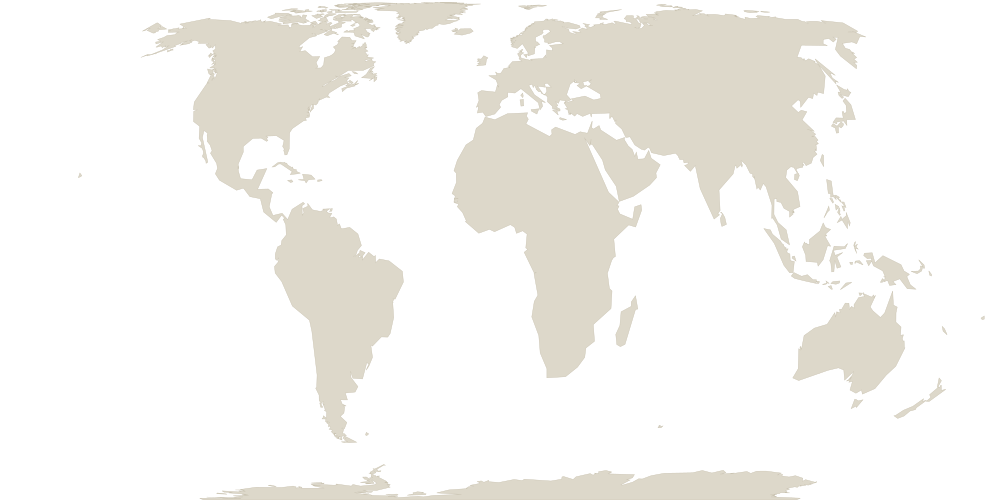
Regions where Triumfetta rhomboidea is native: Angola, Benin, Botswana, Burkina, Burundi, Cameroon, Cape Provinces, Cape Verde, Central African Republic, Congo, DR Congo, Eritrea, Eswatini, Ethiopia, Gabon, Gambia, Ghana, Guinea, Guinea-Bissau, Gulf of Guinea Is., Ivory Coast, Kenya, KwaZulu-Natal, Liberia, Malawi, Mali, Mozambique, Namibia, Nigeria, Northern Provinces, Rwanda, Senegal, Sierra Leone, Sudan-South Sudan, Tanzania, Togo, Uganda, Zambia, Zimbabwe, China South-Central, China Southeast, Kazan-retto, Nansei-shoto, Saudi Arabia, Taiwan, Yemen, Andaman Is., Assam, Bangladesh, Cambodia, East Himalaya, India, Laos, Lesser Sunda Is., Malaya, Myanmar, Nepal, Nicobar Is., Pakistan, Philippines, Solomon Is., South China Sea, Sri Lanka, Thailand, Vietnam, West Himalaya, Queensland AngolaBeninBotswanaBurkinaBurundiCameroonCape ProvincesCentral African RepublicCongoDR CongoEritreaEswatiniEthiopiaGabonGambiaGhanaGuineaGuinea-BissauGulf of Guinea Is.Ivory CoastKenyaKwaZulu-NatalLiberiaMalawiMaliMozambiqueNamibiaNigeriaNorthern ProvincesRwandaSenegalSierra LeoneSudan-South SudanTanzaniaTogoUgandaZambiaZimbabweChina South-CentralChina SoutheastSaudi ArabiaTaiwanYemenAssamBangladeshCambodiaEast HimalayaIndiaLaosLesser Sunda Is.MalayaMyanmarNepalPakistanPhilippinesSolomon Is.Sri LankaThailandVietnamWest HimalayaQueensland Cape VerdeNansei-shotoAndaman Is.Nicobar Is.South China Sea
Native distribution of Triumfetta rhomboidea, after Kew’s World Checklist of Vascular Plants. Introduced, extinct and doubtful records are excluded, so this is where the plant is from, not everywhere it now grows. Regions too small to draw at this scale are marked with a dot.
RegionTDWG codeContinent
Angola ANG AFRICA
Benin BEN
Botswana BOT
Burkina BKN
Burundi BUR
Cameroon CMN
Cape Provinces CPP
Cape Verde CVI
Central African Republic CAF
Congo CON
DR Congo ZAI
Eritrea ERI
Eswatini SWZ
Ethiopia ETH
Gabon GAB
Gambia GAM
Ghana GHA
Guinea GUI
Guinea-Bissau GNB
Gulf of Guinea Is. GGI
Ivory Coast IVO
Kenya KEN
KwaZulu-Natal NAT
Liberia LBR
Malawi MLW
Mali MLI
Mozambique MOZ
Namibia NAM
Nigeria NGA
Northern Provinces TVL
Rwanda RWA
Senegal SEN
Sierra Leone SIE
Sudan-South Sudan SUD
Tanzania TAN
Togo TOG
Uganda UGA
Zambia ZAM
Zimbabwe ZIM
Andaman Is. AND ASIA-TROPICAL
Assam ASS
Bangladesh BAN
Cambodia CBD
East Himalaya EHM
India IND
Laos LAO
Lesser Sunda Is. LSI
Malaya MLY
Myanmar MYA
Nepal NEP
Nicobar Is. NCB
Pakistan PAK
Philippines PHI
Solomon Is. SOL
South China Sea SCS
Sri Lanka SRL
Thailand THA
Vietnam VIE
West Himalaya WHM
China South-Central CHC ASIA-TEMPERATE
China Southeast CHS
Kazan-retto KZN
Nansei-shoto NNS
Saudi Arabia SAU
Taiwan TAI
Yemen YEM
Queensland QLD AUSTRALASIA

Not drawn on the map: Kazan-retto. We hold no public-domain boundary for this region, so it is listed rather than guessed at.

Region boundaries approximated from Natural Earth (public domain) and mapped to TDWG World Geographical Scheme for Recording Plant Distributions (WGSRPD) level-3 botanical countries (Brummitt 2001). Indicative, not the official WGSRPD geometry.

Flowering 62 in flower of 92 examined

Proportion of examined Triumfetta rhomboidea in flower, by month
Month In flower Examined Share 95% interval
Jan 1 3 too few examined
Feb 2 4 too few examined
Mar 2 5 40% 12% to 77%
Apr 12 13 92% 67% to 99%
May 6 10 60% 31% to 83%
Jun 3 8 38% 14% to 69%
Jul 4 6 67% 30% to 90%
Aug 1 2 too few examined
Sep 6 8 75% 41% to 93%
Oct 12 15 80% 55% to 93%
Nov 9 14 64% 39% to 84%
Dec 4 4 too few examined

Peak flowering in Apr. Each bar is the share of Triumfetta rhomboidea observations in which someone actually recorded the reproductive state and found the plant in flower, not the raw number of flowering records. That distinction matters: people observe plants far more in spring than in winter, so a bare count of flowering records partly measures when people go outside. Dividing by the number examined removes that. 62 of 92 examined observations were in flower, every one of them research grade. The whisker on each bar is a 95% Wilson interval. 4 months have fewer than 5 examined observations, so no proportion is drawn for them. This is still a global aggregate and not a forecast for your garden: the same species flowers on different dates in different hemispheres. Where a species has fewer than 30 flowering records we do not draw this chart at all. Computed from 10.15468/dl.cgje2x.

Also published as 32 synonyms

A synonym is not an error. It is a record of botanists disagreeing, in print, about where this plant belongs. Each of these was somebody’s considered answer.

  • Bartramia angulata Lam.
  • Bartramia crispifolia Stokes
  • Bartramia glandulosa Lam.
  • Bartramia indica L.
  • Bartramia lappago Gaertn.
  • Bartramia rhombifolia Stokes
  • Mopex sinensis Lour. ex Gomes Mach.
  • Triumfetta angulata Lam.
  • Triumfetta bartramia L.
  • Triumfetta canacorum Gand.
  • Triumfetta dembianensis Chiov.
  • Triumfetta diversifolia E.Mey.
  • Triumfetta eriocarpa A.St.-Hil.
  • Triumfetta excisa Urb.
  • Triumfetta glandulosa Forssk.
  • Triumfetta indica Lam.
  • Triumfetta martiana Turcz.
  • Triumfetta mauritiana C.Presl
  • Triumfetta mollis Schumach. & Thonn.
  • Triumfetta pseudoangulata Blume
  • Triumfetta rhombeifolia Sw.
  • Triumfetta rhomboidea var. angulata (Lam.) Baker
  • Triumfetta rhomboidea var. glandulosa (Forssk.) Baker
  • Triumfetta rhomboidea var. recifensis Monteiro

and 8 more.

Sourcesevery claim on this page

  1. World Flora Online Plant List. accepted name, authority, classification. CC0. Retrieved 2026-07-12.
  2. iNaturalist. photographs and flowering annotations, CC0 / CC BY / CC BY-SA only. per photograph. Retrieved 2026-06-27.
  3. Wikidata. common name (P1843), joined on the World Flora Online identifier (P7715). CC0. Retrieved 2026-07-13.
  4. Kew, World Checklist of Vascular Plants (WCVP v16). native distribution by TDWG level-3 botanical country, and life form. CC BY 3.0. Retrieved 2026-06-04.

We publish what we can source and we say so when we cannot. This page has no care advice and no toxicity claim, because we do not yet have those from a source we can cite.