Setaria viridis(L.) P.Beauv.

green bristlegrassgreen bristol-grass

WFO wfo-0000899679 Accepted WFO 2026-06 8 photographs CC0 / CC BY

Plate 1 figs. a–h · 8 separate observations

Setaria viridis, photographed by Aleksei Baushev
fig. a Aleksei Baushev, CC BY 4.0 / 2021-10-23 / obs. 165127670

Every figure is a research-grade observation under CC0, CC BY or CC BY-SA, rehosted with the photographer’s name, the licence and the observation it came from. Photographs under a NonCommercial licence are excluded from this site and are never stored, which costs us a great many pictures and is not negotiable.

Native range 102 botanical countries
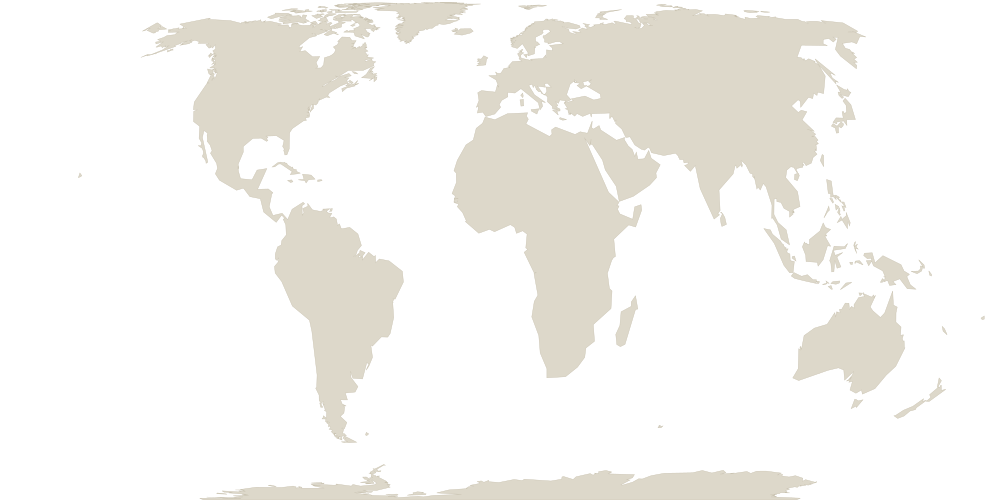
Regions where Setaria viridis is native: Algeria, Canary Is., Chad, Egypt, Libya, Madeira, Mauritania, Morocco, Niger, Sudan-South Sudan, Tunisia, Afghanistan, Altay, Amur, Buryatiya, China North-Central, China South-Central, China Southeast, Chita, Cyprus, East Aegean Is., Gulf States, Inner Mongolia, Iran, Iraq, Irkutsk, Japan, Kazakhstan, Khabarovsk, Kirgizstan, Korea, Krasnoyarsk, Kuril Is., Kuwait, Lebanon-Syria, Manchuria, Mongolia, Nansei-shoto, North Caucasus, Oman, Palestine, Primorye, Qinghai, Sakhalin, Saudi Arabia, Sinai, Tadzhikistan, Taiwan, Tibet, Transcaucasus, Türkiye, Turkmenistan, Tuva, Uzbekistan, West Siberia, Xinjiang, Yakutiya, Bangladesh, Cambodia, East Himalaya, Lesser Sunda Is., Myanmar, Nepal, New Guinea, Pakistan, Philippines, Sumatera, Thailand, Vietnam, West Himalaya, New South Wales, Northern Territory, Queensland, South Australia, Tasmania, Victoria, Albania, Austria, Baleares, Belgium, Bulgaria, Corse, Czechia-Slovakia, France, Germany, Greece, Hungary, Italy, Kriti, Krym, Netherlands, NW. Balkan Pen., Poland, Portugal, Romania, Sardegna, Sicilia, South European Russia, Spain, Switzerland, Türkiye-in-Europe, Ukraine AlgeriaChadEgyptLibyaMauritaniaMoroccoNigerSudan-South SudanTunisiaAfghanistanAltayAmurBuryatiyaChina North-CentralChina South-CentralChina SoutheastChitaCyprusEast Aegean Is.Gulf StatesInner MongoliaIranIraqIrkutskJapanKazakhstanKhabarovskKirgizstanKrasnoyarskKuwaitLebanon-SyriaManchuriaMongoliaNorth CaucasusOmanPalestinePrimoryeQinghaiSakhalinSaudi ArabiaSinaiTadzhikistanTaiwanTibetTranscaucasusTürkiyeTurkmenistanTuvaUzbekistanWest SiberiaXinjiangYakutiyaBangladeshCambodiaEast HimalayaLesser Sunda Is.MyanmarNepalNew GuineaPakistanPhilippinesSumateraThailandVietnamWest HimalayaNew South WalesNorthern TerritoryQueenslandSouth AustraliaTasmaniaVictoriaAlbaniaAustriaBelgiumBulgariaCorseCzechia-SlovakiaFranceGermanyGreeceHungaryItalyKritiKrymNetherlandsNW. Balkan Pen.PolandPortugalRomaniaSiciliaSouth European RussiaSpainSwitzerlandTürkiye-in-EuropeUkraine Canary Is.MadeiraKoreaNansei-shotoBalearesSardegna
Native distribution of Setaria viridis, after Kew’s World Checklist of Vascular Plants. Introduced, extinct and doubtful records are excluded, so this is where the plant is from, not everywhere it now grows. Regions too small to draw at this scale are marked with a dot.
RegionTDWG codeContinent
Afghanistan AFG ASIA-TEMPERATE
Altay ALT
Amur AMU
Buryatiya BRY
China North-Central CHN
China South-Central CHC
China Southeast CHS
Chita CTA
Cyprus CYP
East Aegean Is. EAI
Gulf States GST
Inner Mongolia CHI
Iran IRN
Iraq IRQ
Irkutsk IRK
Japan JAP
Kazakhstan KAZ
Khabarovsk KHA
Kirgizstan KGZ
Korea KOR
Krasnoyarsk KRA
Kuril Is. KUR
Kuwait KUW
Lebanon-Syria LBS
Manchuria CHM
Mongolia MON
Nansei-shoto NNS
North Caucasus NCS
Oman OMA
Palestine PAL
Primorye PRM
Qinghai CHQ
Sakhalin SAK
Saudi Arabia SAU
Sinai SIN
Tadzhikistan TZK
Taiwan TAI
Tibet CHT
Transcaucasus TCS
Türkiye TUR
Turkmenistan TKM
Tuva TVA
Uzbekistan UZB
West Siberia WSB
Xinjiang CHX
Yakutiya YAK
Albania ALB EUROPE
Austria AUT
Baleares BAL
Belgium BGM
Bulgaria BUL
Corse COR
Czechia-Slovakia CZE
France FRA
Germany GER
Greece GRC
Hungary HUN
Italy ITA
Kriti KRI
Krym KRY
Netherlands NET
NW. Balkan Pen. YUG
Poland POL
Portugal POR
Romania ROM
Sardegna SAR
Sicilia SIC
South European Russia RUS
Spain SPA
Switzerland SWI
Türkiye-in-Europe TUE
Ukraine UKR
Bangladesh BAN ASIA-TROPICAL
Cambodia CBD
East Himalaya EHM
Lesser Sunda Is. LSI
Myanmar MYA
Nepal NEP
New Guinea NWG
Pakistan PAK
Philippines PHI
Sumatera SUM
Thailand THA
Vietnam VIE
West Himalaya WHM
Algeria ALG AFRICA
Canary Is. CNY
Chad CHA
Egypt EGY
Libya LBY
Madeira MDR
Mauritania MTN
Morocco MOR
Niger NGR
Sudan-South Sudan SUD
Tunisia TUN
New South Wales NSW AUSTRALASIA
Northern Territory NTA
Queensland QLD
South Australia SOA
Tasmania TAS
Victoria VIC

Not drawn on the map: Kuril Is.. We hold no public-domain boundary for this region, so it is listed rather than guessed at.

Region boundaries approximated from Natural Earth (public domain) and mapped to TDWG World Geographical Scheme for Recording Plant Distributions (WGSRPD) level-3 botanical countries (Brummitt 2001). Indicative, not the official WGSRPD geometry.

Flowering 120 in flower of 468 examined

Proportion of examined Setaria viridis in flower, by month
Month In flower Examined Share 95% interval
Jan 0 9 0% 0% to 30%
Feb 0 2 too few examined
Mar 0 2 too few examined
Apr 0 7 0% 0% to 35%
May 2 5 40% 12% to 77%
Jun 14 35 40% 26% to 56%
Jul 39 90 43% 34% to 54%
Aug 38 117 32% 25% to 41%
Sep 18 101 18% 12% to 26%
Oct 6 65 9% 4% to 19%
Nov 3 25 12% 4% to 30%
Dec 0 10 0% 0% to 28%

Peak flowering in Jul. Each bar is the share of Setaria viridis observations in which someone actually recorded the reproductive state and found the plant in flower, not the raw number of flowering records. That distinction matters: people observe plants far more in spring than in winter, so a bare count of flowering records partly measures when people go outside. Dividing by the number examined removes that. 120 of 468 examined observations were in flower, every one of them research grade. The whisker on each bar is a 95% Wilson interval. 2 months have fewer than 5 examined observations, so no proportion is drawn for them. This is still a global aggregate and not a forecast for your garden: the same species flowers on different dates in different hemispheres. Where a species has fewer than 30 flowering records we do not draw this chart at all. Computed from 10.15468/dl.cgje2x.

Also published as 136 synonyms

A synonym is not an error. It is a record of botanists disagreeing, in print, about where this plant belongs. Each of these was somebody’s considered answer.

  • Chaetochloa comosa (Steud.) Koidz.
  • Chaetochloa gigantea (Franch. & Sav.) Honda
  • Chaetochloa gigantea var. furcata Honda
  • Chaetochloa gigantea var. pilosa Honda
  • Chaetochloa viridis (L.) Scribn.
  • Chaetochloa viridis subvar. lanceolata (Matsum.) Honda
  • Chaetochloa viridis subvar. linearis Honda
  • Chaetochloa viridis var. breviseta (Döll) Farw.
  • Chaetochloa viridis var. depressa (Honda) Kitag.
  • Chaetochloa viridis var. japonica Koidz.
  • Chaetochloa viridis var. major (Gaudin) Farw.
  • Chaetochloa viridis var. minor (W.D.J.Koch) Farw.
  • Chaetochloa viridis var. pachystachys (Franch. & Sav.) Honda
  • Chaetochloa viridis var. weinmannii (Roem. & Schult.) House
  • Chamaeraphis italica var. viridis (L.) Kuntze
  • Chamaeraphis viridis (L.) Millsp.
  • Ixophorus viridis (L.) Nash
  • Panicum bicolor Moench
  • Panicum comosum Steud.
  • Panicum comosum Steud.
  • Panicum giganteum (Franch. & Sav.) E.H.L.Krause
  • Panicum humile Thunb. ex Trin.
  • Panicum italicum var. viride (L.) Körn.
  • Panicum laevigatum Lam.

and 112 more.

Sourcesevery claim on this page

  1. World Flora Online Plant List. accepted name, authority, classification. CC0. Retrieved 2026-07-12.
  2. iNaturalist. photographs and flowering annotations, CC0 / CC BY / CC BY-SA only. per photograph. Retrieved 2026-06-27.
  3. Wikidata. common name (P1843), joined on the World Flora Online identifier (P7715). CC0. Retrieved 2026-07-13.
  4. Kew, World Checklist of Vascular Plants (WCVP v16). native distribution by TDWG level-3 botanical country, and life form. CC BY 3.0. Retrieved 2026-06-04.

We publish what we can source and we say so when we cannot. This page has no care advice and no toxicity claim, because we do not yet have those from a source we can cite.