Ipomoea violaceaL.

Beach moonflowerSea moonflowerbeach moonflower

WFO wfo-0001297273 Accepted WFO 2026-06 8 photographs CC0 / CC BY / CC BY-SA

Plate 1 figs. a–h · 8 separate observations

Ipomoea violacea, photographed by Juan Cruzado Cortés
fig. a Juan Cruzado Cortés, CC BY-SA 4.0 / 2022-06-04 / obs. 203342637

Every figure is a research-grade observation under CC0, CC BY or CC BY-SA, rehosted with the photographer’s name, the licence and the observation it came from. Photographs under a NonCommercial licence are excluded from this site and are never stored, which costs us a great many pictures and is not negotiable.

Native range 92 botanical countries
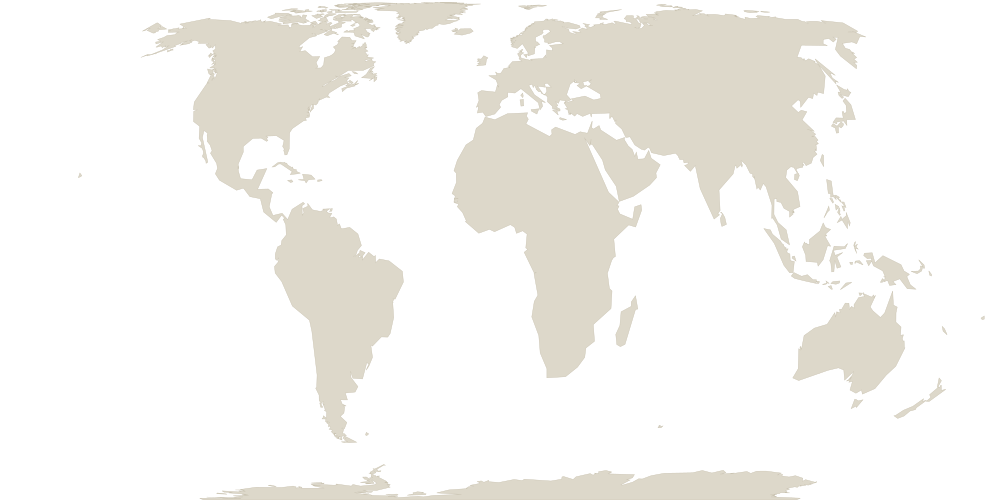
Regions where Ipomoea violacea is native: Aldabra, Comoros, Ghana, Guinea, Ivory Coast, Kenya, Madagascar, Mauritius, Mozambique, Rodrigues, Senegal, Seychelles, Tanzania, China Southeast, Hainan, Japan, Nansei-shoto, Ogasawara-shoto, Taiwan, Andaman Is., Assam, Bangladesh, Bismarck Archipelago, Borneo, Cambodia, Christmas I., Cocos (Keeling) Is., India, Jawa, Malaya, Maluku, Myanmar, New Guinea, Nicobar Is., Philippines, Solomon Is., South China Sea, Sri Lanka, Sumatera, Thailand, Vietnam, Northern Territory, Queensland, Western Australia, Florida, Mexico Southeast, Mexico Southwest, Texas, Caroline Is., Cook Is., Fiji, Gilbert Is., Line Is., Marianas, Marquesas, Marshall Is., Nauru, New Caledonia, Niue, Phoenix Is., Pitcairn Is., Samoa, Society Is., Tokelau-Manihiki, Tonga, Tuamotu, Tubuai Is., Tuvalu, Vanuatu, Wake I., Wallis-Futuna Is., Aruba, Bahamas, Belize, Brazil Northeast, Brazil Southeast, Cayman Is., Colombia, Cuba, Dominican Republic, French Guiana, Guyana, Haiti, Jamaica, Leeward Is., Netherlands Antilles, Panamá, Puerto Rico, Suriname, Trinidad-Tobago, Venezuela, Windward Is. GhanaGuineaIvory CoastKenyaMadagascarMozambiqueSenegalTanzaniaChina SoutheastHainanJapanTaiwanAssamBangladeshBismarck ArchipelagoBorneoCambodiaIndiaJawaMalayaMalukuMyanmarNew GuineaPhilippinesSolomon Is.Sri LankaSumateraThailandVietnamNorthern TerritoryQueenslandWestern AustraliaFloridaMexico SoutheastMexico SouthwestTexasFijiNew CaledoniaBelizeBrazil NortheastBrazil SoutheastColombiaCubaDominican RepublicFrench GuianaGuyanaHaitiJamaicaPanamáPuerto RicoSurinameTrinidad-TobagoVenezuela AldabraComorosMauritiusRodriguesSeychellesNansei-shotoAndaman Is.Christmas I.Nicobar Is.South China SeaCaroline Is.Cook Is.Line Is.MarianasMarquesasMarshall Is.NauruNiuePitcairn Is.SamoaSociety Is.Tokelau-ManihikiTongaTuamotuTubuai Is.TuvaluVanuatuWake I.Wallis-Futuna Is.ArubaBahamasCayman Is.Leeward Is.Netherlands AntillesWindward Is.
Native distribution of Ipomoea violacea, after Kew’s World Checklist of Vascular Plants. Introduced, extinct and doubtful records are excluded, so this is where the plant is from, not everywhere it now grows. Regions too small to draw at this scale are marked with a dot.
RegionTDWG codeContinent
Caroline Is. CRL PACIFIC
Cook Is. COO
Fiji FIJ
Gilbert Is. GIL
Line Is. LIN
Marianas MRN
Marquesas MRQ
Marshall Is. MRS
Nauru NRU
New Caledonia NWC
Niue NUE
Phoenix Is. PHX
Pitcairn Is. PIT
Samoa SAM
Society Is. SCI
Tokelau-Manihiki TOK
Tonga TON
Tuamotu TUA
Tubuai Is. TUB
Tuvalu TUV
Vanuatu VAN
Wake I. WAK
Wallis-Futuna Is. WAL
Andaman Is. AND ASIA-TROPICAL
Assam ASS
Bangladesh BAN
Bismarck Archipelago BIS
Borneo BOR
Cambodia CBD
Christmas I. XMS
Cocos (Keeling) Is. CKI
India IND
Jawa JAW
Malaya MLY
Maluku MOL
Myanmar MYA
New Guinea NWG
Nicobar Is. NCB
Philippines PHI
Solomon Is. SOL
South China Sea SCS
Sri Lanka SRL
Sumatera SUM
Thailand THA
Vietnam VIE
Aruba ARU SOUTHERN AMERICA
Bahamas BAH
Belize BLZ
Brazil Northeast BZE
Brazil Southeast BZL
Cayman Is. CAY
Colombia CLM
Cuba CUB
Dominican Republic DOM
French Guiana FRG
Guyana GUY
Haiti HAI
Jamaica JAM
Leeward Is. LEE
Netherlands Antilles NLA
Panamá PAN
Puerto Rico PUE
Suriname SUR
Trinidad-Tobago TRT
Venezuela VEN
Windward Is. WIN
Aldabra ALD AFRICA
Comoros COM
Ghana GHA
Guinea GUI
Ivory Coast IVO
Kenya KEN
Madagascar MDG
Mauritius MAU
Mozambique MOZ
Rodrigues ROD
Senegal SEN
Seychelles SEY
Tanzania TAN
China Southeast CHS ASIA-TEMPERATE
Hainan CHH
Japan JAP
Nansei-shoto NNS
Ogasawara-shoto OGA
Taiwan TAI
Florida FLA NORTHERN AMERICA
Mexico Southeast MXT
Mexico Southwest MXS
Texas TEX
Northern Territory NTA AUSTRALASIA
Queensland QLD
Western Australia WAU

Not drawn on the map: Ogasawara-shoto, Cocos (Keeling) Is., Gilbert Is., Phoenix Is.. We hold no public-domain boundary for these regions, so they are listed rather than guessed at.

Region boundaries approximated from Natural Earth (public domain) and mapped to TDWG World Geographical Scheme for Recording Plant Distributions (WGSRPD) level-3 botanical countries (Brummitt 2001). Indicative, not the official WGSRPD geometry.

Flowering 89 in flower of 142 examined

Proportion of examined Ipomoea violacea in flower, by month
Month In flower Examined Share 95% interval
Jan 5 10 50% 24% to 76%
Feb 6 8 75% 41% to 93%
Mar 12 16 75% 51% to 90%
Apr 10 20 50% 30% to 70%
May 7 13 54% 29% to 77%
Jun 13 17 76% 53% to 90%
Jul 9 13 69% 42% to 87%
Aug 7 9 78% 45% to 94%
Sep 4 7 57% 25% to 84%
Oct 1 5 20% 4% to 62%
Nov 11 15 73% 48% to 89%
Dec 4 9 44% 19% to 73%

Peak flowering in Aug. Each bar is the share of Ipomoea violacea observations in which someone actually recorded the reproductive state and found the plant in flower, not the raw number of flowering records. That distinction matters: people observe plants far more in spring than in winter, so a bare count of flowering records partly measures when people go outside. Dividing by the number examined removes that. 89 of 142 examined observations were in flower, every one of them research grade. The whisker on each bar is a 95% Wilson interval. This is still a global aggregate and not a forecast for your garden: the same species flowers on different dates in different hemispheres. Where a species has fewer than 30 flowering records we do not draw this chart at all. Computed from 10.15468/dl.cgje2x.

Also published as 17 synonyms

A synonym is not an error. It is a record of botanists disagreeing, in print, about where this plant belongs. Each of these was somebody’s considered answer.

  • Calonyction comespermum Bojer
  • Calonyction grandiflorum Choisy
  • Calonyction jacquinii G.Don
  • Calonyction macranthum (Schult.) Lem.
  • Calonyction muticum Decne.
  • Calonyction tuba (Schltdl.) Colla
  • Convolvulus catharticus Blanco
  • Convolvulus grandiflorus Jacq.
  • Convolvulus longiflorus Spreng.
  • Convolvulus muticus (Decne.) Steud.
  • Convolvulus tuba Schltdl.
  • Ipomoea comosperma Drake
  • Ipomoea glaberrima Bojer ex Hook.
  • Ipomoea macrantha Roem. & Schult.
  • Ipomoea tuba (Schltdl.) G.Don
  • Pharbitis violacea (L.) Bojer
  • Tereietra violacea Raf.

Sourcesevery claim on this page

  1. World Flora Online Plant List. accepted name, authority, classification. CC0. Retrieved 2026-07-12.
  2. iNaturalist. photographs and flowering annotations, CC0 / CC BY / CC BY-SA only. per photograph. Retrieved 2026-06-27.
  3. Wikidata. common name (P1843), joined on the World Flora Online identifier (P7715). CC0. Retrieved 2026-07-13.
  4. Kew, World Checklist of Vascular Plants (WCVP v16). native distribution by TDWG level-3 botanical country, and life form. CC BY 3.0. Retrieved 2026-06-04.

We publish what we can source and we say so when we cannot. This page has no care advice and no toxicity claim, because we do not yet have those from a source we can cite.