Eriophorum gracileRoth

slender cottongrass

WFO wfo-0000414996 Accepted WFO 2026-06 8 photographs CC0 / CC BY

Plate 1 figs. a–h · 8 separate observations

Eriophorum gracile, photographed by Anastasia Titovets
fig. a Anastasia Titovets, CC BY 4.0 / 2021-07-19 / obs. 176685005

Every figure is a research-grade observation under CC0, CC BY or CC BY-SA, rehosted with the photographer’s name, the licence and the observation it came from. Photographs under a NonCommercial licence are excluded from this site and are never stored, which costs us a great many pictures and is not negotiable.

Native range 94 botanical countries
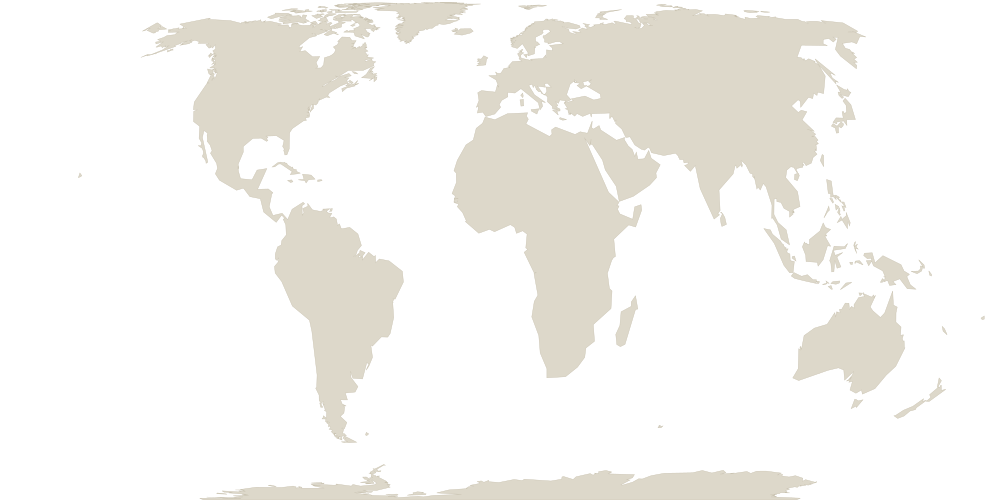
Regions where Eriophorum gracile is native: Altay, Amur, Buryatiya, China South-Central, Chita, Inner Mongolia, Irkutsk, Japan, Kamchatka, Kazakhstan, Khabarovsk, Korea, Krasnoyarsk, Kuril Is., Magadan, Manchuria, Mongolia, Primorye, Sakhalin, Tibet, West Siberia, Yakutiya, Austria, Baltic States, Belarus, Belgium, Bulgaria, Central European Russia, Czechia-Slovakia, Denmark, East European Russia, Finland, France, Germany, Great Britain, Greece, Hungary, Ireland, Italy, Netherlands, North European Russia, Northwest European Russia, Norway, NW. Balkan Pen., Poland, Romania, South European Russia, Switzerland, Ukraine, Alaska, Alberta, British Columbia, California, Colorado, Connecticut, Idaho, Illinois, Indiana, Iowa, Labrador, Maine, Manitoba, Maryland, Massachusetts, Michigan, Minnesota, Montana, Nebraska, Nevada, New Brunswick, New Hampshire, New Jersey, New Mexico, New York, Newfoundland, North Dakota, Northwest Territories, Nova Scotia, Nunavut, Ohio, Ontario, Oregon, Pennsylvania, Prince Edward I., Québec, Rhode I., Saskatchewan, South Dakota, Utah, Vermont, Washington, Wisconsin, Wyoming, Yukon AltayAmurBuryatiyaChina South-CentralChitaInner MongoliaIrkutskJapanKamchatkaKazakhstanKhabarovskKrasnoyarskMagadanManchuriaMongoliaPrimoryeSakhalinTibetWest SiberiaYakutiyaAustriaBaltic StatesBelarusBelgiumBulgariaCentral European RussiaCzechia-SlovakiaDenmarkEast European RussiaFinlandFranceGermanyGreeceHungaryIrelandItalyNetherlandsNorth European RussiaNorthwest European RussiaNorwayNW. Balkan Pen.PolandRomaniaSouth European RussiaSwitzerlandUkraineAlaskaAlbertaBritish ColumbiaCaliforniaColoradoConnecticutIdahoIllinoisIndianaIowaLabradorMaineManitobaMarylandMassachusettsMichiganMinnesotaMontanaNebraskaNevadaNew BrunswickNew HampshireNew JerseyNew MexicoNew YorkNewfoundlandNorth DakotaNorthwest TerritoriesNova ScotiaNunavutOhioOntarioOregonPennsylvaniaPrince Edward I.QuébecSaskatchewanSouth DakotaUtahVermontWashingtonWisconsinWyomingYukon KoreaRhode I.
Native distribution of Eriophorum gracile, after Kew’s World Checklist of Vascular Plants. Introduced, extinct and doubtful records are excluded, so this is where the plant is from, not everywhere it now grows. Regions too small to draw at this scale are marked with a dot.
RegionTDWG codeContinent
Alaska ASK NORTHERN AMERICA
Alberta ABT
British Columbia BRC
California CAL
Colorado COL
Connecticut CNT
Idaho IDA
Illinois ILL
Indiana INI
Iowa IOW
Labrador LAB
Maine MAI
Manitoba MAN
Maryland MRY
Massachusetts MAS
Michigan MIC
Minnesota MIN
Montana MNT
Nebraska NEB
Nevada NEV
New Brunswick NBR
New Hampshire NWH
New Jersey NWJ
New Mexico NWM
New York NWY
Newfoundland NFL
North Dakota NDA
Northwest Territories NWT
Nova Scotia NSC
Nunavut NUN
Ohio OHI
Ontario ONT
Oregon ORE
Pennsylvania PEN
Prince Edward I. PEI
Québec QUE
Rhode I. RHO
Saskatchewan SAS
South Dakota SDA
Utah UTA
Vermont VER
Washington WAS
Wisconsin WIS
Wyoming WYO
Yukon YUK
Austria AUT EUROPE
Baltic States BLT
Belarus BLR
Belgium BGM
Bulgaria BUL
Central European Russia RUC
Czechia-Slovakia CZE
Denmark DEN
East European Russia RUE
Finland FIN
France FRA
Germany GER
Great Britain GRB
Greece GRC
Hungary HUN
Ireland IRE
Italy ITA
Netherlands NET
North European Russia RUN
Northwest European Russia RUW
Norway NOR
NW. Balkan Pen. YUG
Poland POL
Romania ROM
South European Russia RUS
Switzerland SWI
Ukraine UKR
Altay ALT ASIA-TEMPERATE
Amur AMU
Buryatiya BRY
China South-Central CHC
Chita CTA
Inner Mongolia CHI
Irkutsk IRK
Japan JAP
Kamchatka KAM
Kazakhstan KAZ
Khabarovsk KHA
Korea KOR
Krasnoyarsk KRA
Kuril Is. KUR
Magadan MAG
Manchuria CHM
Mongolia MON
Primorye PRM
Sakhalin SAK
Tibet CHT
West Siberia WSB
Yakutiya YAK

Not drawn on the map: Kuril Is., Great Britain. We hold no public-domain boundary for these regions, so they are listed rather than guessed at.

Region boundaries approximated from Natural Earth (public domain) and mapped to TDWG World Geographical Scheme for Recording Plant Distributions (WGSRPD) level-3 botanical countries (Brummitt 2001). Indicative, not the official WGSRPD geometry.

Where it actually grows measured, from 466 observations

Condition 5th percentile Median 95th percentile
Coldest month, mean daily low -24.3 °C -11.9 °C -4.5 °C
Warmest month, mean daily high 17.8 °C 23.6 °C 27.7 °C
Annual rainfall 521 mm 928 mm 1,651 mm
Rainfall in the driest quarter 39 mm 104 mm 293 mm

It is found where winters are severely cold. This is not care advice and it is not a forecast. It is a measurement: we sampled the climate at every one of the 466 research-grade observations of Eriophorum gracile that carry a coordinate, and this is the range those places actually span. The 5th and 95th percentiles are used rather than the minimum and maximum, because a single cultivated specimen in a heated conservatory should not widen a tropical plant's range to the Arctic.

This is not a hardiness zone. A USDA zone is the average annual extreme minimum temperature. The figure above is the mean daily minimum of the coldest month, which is a different quantity and is typically far warmer. Reading one as the other would place a plant several zones too warm, so we do not publish a hardiness zone, because we do not have one.

Also published as 17 synonyms

A synonym is not an error. It is a record of botanists disagreeing, in print, about where this plant belongs. Each of these was somebody’s considered answer.

  • Eriophorum asiaticum V.N.Vassil.
  • Eriophorum coreanum Palla
  • Eriophorum gracile subsp. asiaticum Tolm.
  • Eriophorum gracile subsp. asiaticum (V.N.Vassil.) M.S.Novos.
  • Eriophorum gracile subsp. coreanum (Palla) Hultén
  • Eriophorum gracile subsp. hoefftii (F.Nyl.) Nyman
  • Eriophorum gracile var. caurianum Fernald
  • Eriophorum gracile var. coreanum (Palla) Ohwi
  • Eriophorum gracile var. gracile
  • Eriophorum gracile var. paucinervium Engelm.
  • Eriophorum hoefftii F.Nyl.
  • Eriophorum pallidum Nees
  • Eriophorum paucinervium (Engelm.) A.A.Eaton
  • Eriophorum polystachion subsp. gracile (W.D.J.Koch) Bonnier & Layens
  • Eriophorum triquetrum Hoppe
  • Scirpus ardea T.Koyama
  • Scirpus ardea var. coreanus (Palla) T.Koyama

Sourcesevery claim on this page

  1. World Flora Online Plant List. accepted name, authority, classification. CC0. Retrieved 2026-07-12.
  2. iNaturalist. photographs and flowering annotations, CC0 / CC BY / CC BY-SA only. per photograph. Retrieved 2026-06-27.
  3. Wikidata. common name (P1843), joined on the World Flora Online identifier (P7715). CC0. Retrieved 2026-07-13.
  4. Kew, World Checklist of Vascular Plants (WCVP v16). native distribution by TDWG level-3 botanical country, and life form. CC BY 3.0. Retrieved 2026-06-04.

We publish what we can source and we say so when we cannot. This page has no care advice and no toxicity claim, because we do not yet have those from a source we can cite.