Artemisia dracunculusL.

tarragon

WFO wfo-0000078900 Accepted WFO 2026-06 8 photographs CC0 / CC BY

Plate 1 figs. a–h · 8 separate observations

Artemisia dracunculus, photographed by Yurii Basov
fig. a Yurii Basov, CC BY 4.0 / 2022-05-30 / obs. 201856705

Every figure is a research-grade observation under CC0, CC BY or CC BY-SA, rehosted with the photographer’s name, the licence and the observation it came from. Photographs under a NonCommercial licence are excluded from this site and are never stored, which costs us a great many pictures and is not negotiable.

Native range 101 botanical countries
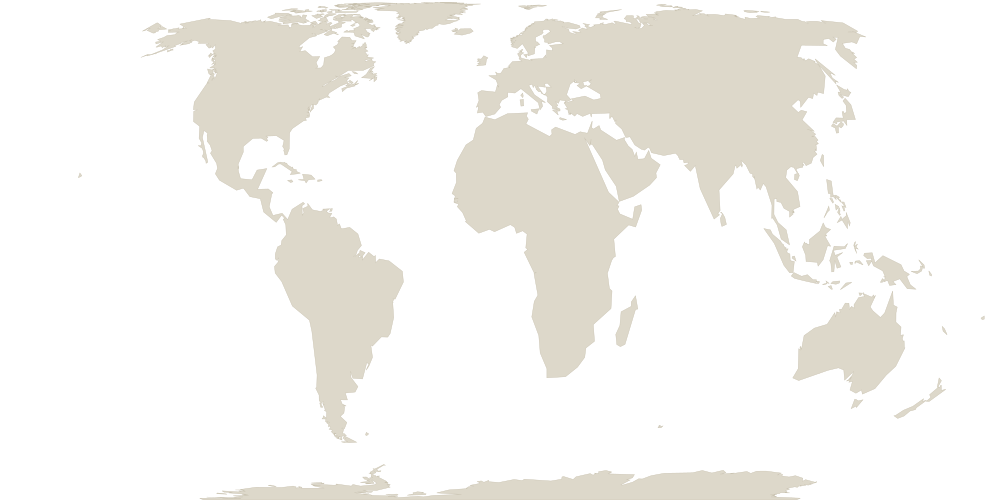
Regions where Artemisia dracunculus is native: Afghanistan, Altay, Amur, Buryatiya, China North-Central, China South-Central, China Southeast, Chita, Gulf States, Hainan, Inner Mongolia, Iran, Iraq, Irkutsk, Japan, Kazakhstan, Khabarovsk, Kirgizstan, Krasnoyarsk, Kuwait, Lebanon-Syria, Magadan, Manchuria, Mongolia, North Caucasus, Oman, Palestine, Primorye, Qinghai, Saudi Arabia, Tadzhikistan, Taiwan, Tibet, Transcaucasus, Türkiye, Turkmenistan, Tuva, Uzbekistan, West Siberia, Xinjiang, Yakutiya, Yemen, Borneo, East Himalaya, Jawa, Malaya, Myanmar, Nepal, Pakistan, Philippines, Vietnam, West Himalaya, Baltic States, Belarus, Central European Russia, East European Russia, Krym, Netherlands, North European Russia, Northwest European Russia, Portugal, South European Russia, Spain, Ukraine, Alberta, Arizona, British Columbia, California, Colorado, Idaho, Illinois, Iowa, Kansas, Manitoba, Mexico Central, Mexico Gulf, Mexico Northeast, Mexico Northwest, Mexico Southeast, Mexico Southwest, Minnesota, Missouri, Montana, Nebraska, Nevada, New Mexico, New York, North Dakota, Northwest Territories, Oklahoma, Ontario, Oregon, Saskatchewan, South Dakota, Texas, Utah, Vermont, Washington, Wisconsin, Wyoming, Yukon AfghanistanAltayAmurBuryatiyaChina North-CentralChina South-CentralChina SoutheastChitaGulf StatesHainanInner MongoliaIranIraqIrkutskJapanKazakhstanKhabarovskKirgizstanKrasnoyarskKuwaitLebanon-SyriaMagadanManchuriaMongoliaNorth CaucasusOmanPalestinePrimoryeQinghaiSaudi ArabiaTadzhikistanTaiwanTibetTranscaucasusTürkiyeTurkmenistanTuvaUzbekistanWest SiberiaXinjiangYakutiyaYemenBorneoEast HimalayaJawaMalayaMyanmarNepalPakistanPhilippinesVietnamWest HimalayaBaltic StatesBelarusCentral European RussiaEast European RussiaKrymNetherlandsNorth European RussiaNorthwest European RussiaPortugalSouth European RussiaSpainUkraineAlbertaArizonaBritish ColumbiaCaliforniaColoradoIdahoIllinoisIowaKansasManitobaMexico CentralMexico GulfMexico NortheastMexico NorthwestMexico SoutheastMexico SouthwestMinnesotaMissouriMontanaNebraskaNevadaNew MexicoNew YorkNorth DakotaNorthwest TerritoriesOklahomaOntarioOregonSaskatchewanSouth DakotaTexasUtahVermontWashingtonWisconsinWyomingYukon
Native distribution of Artemisia dracunculus, after Kew’s World Checklist of Vascular Plants. Introduced, extinct and doubtful records are excluded, so this is where the plant is from, not everywhere it now grows.
RegionTDWG codeContinent
Afghanistan AFG ASIA-TEMPERATE
Altay ALT
Amur AMU
Buryatiya BRY
China North-Central CHN
China South-Central CHC
China Southeast CHS
Chita CTA
Gulf States GST
Hainan CHH
Inner Mongolia CHI
Iran IRN
Iraq IRQ
Irkutsk IRK
Japan JAP
Kazakhstan KAZ
Khabarovsk KHA
Kirgizstan KGZ
Krasnoyarsk KRA
Kuwait KUW
Lebanon-Syria LBS
Magadan MAG
Manchuria CHM
Mongolia MON
North Caucasus NCS
Oman OMA
Palestine PAL
Primorye PRM
Qinghai CHQ
Saudi Arabia SAU
Tadzhikistan TZK
Taiwan TAI
Tibet CHT
Transcaucasus TCS
Türkiye TUR
Turkmenistan TKM
Tuva TVA
Uzbekistan UZB
West Siberia WSB
Xinjiang CHX
Yakutiya YAK
Yemen YEM
Alberta ABT NORTHERN AMERICA
Arizona ARI
British Columbia BRC
California CAL
Colorado COL
Idaho IDA
Illinois ILL
Iowa IOW
Kansas KAN
Manitoba MAN
Mexico Central MXC
Mexico Gulf MXG
Mexico Northeast MXE
Mexico Northwest MXN
Mexico Southeast MXT
Mexico Southwest MXS
Minnesota MIN
Missouri MSO
Montana MNT
Nebraska NEB
Nevada NEV
New Mexico NWM
New York NWY
North Dakota NDA
Northwest Territories NWT
Oklahoma OKL
Ontario ONT
Oregon ORE
Saskatchewan SAS
South Dakota SDA
Texas TEX
Utah UTA
Vermont VER
Washington WAS
Wisconsin WIS
Wyoming WYO
Yukon YUK
Baltic States BLT EUROPE
Belarus BLR
Central European Russia RUC
East European Russia RUE
Krym KRY
Netherlands NET
North European Russia RUN
Northwest European Russia RUW
Portugal POR
South European Russia RUS
Spain SPA
Ukraine UKR
Borneo BOR ASIA-TROPICAL
East Himalaya EHM
Jawa JAW
Malaya MLY
Myanmar MYA
Nepal NEP
Pakistan PAK
Philippines PHI
Vietnam VIE
West Himalaya WHM

Region boundaries approximated from Natural Earth (public domain) and mapped to TDWG World Geographical Scheme for Recording Plant Distributions (WGSRPD) level-3 botanical countries (Brummitt 2001). Indicative, not the official WGSRPD geometry.

Flowering 111 in flower of 315 examined

Proportion of examined Artemisia dracunculus in flower, by month
Month In flower Examined Share 95% interval
Jan 0 3 too few examined
Feb 0 7 0% 0% to 35%
Mar 0 11 0% 0% to 26%
Apr 0 18 0% 0% to 18%
May 2 18 11% 3% to 33%
Jun 3 31 10% 3% to 25%
Jul 27 61 44% 33% to 57%
Aug 36 79 46% 35% to 56%
Sep 27 43 63% 48% to 76%
Oct 10 21 48% 28% to 68%
Nov 4 15 27% 11% to 52%
Dec 2 8 25% 7% to 59%

Peak flowering in Sep. Each bar is the share of Artemisia dracunculus observations in which someone actually recorded the reproductive state and found the plant in flower, not the raw number of flowering records. That distinction matters: people observe plants far more in spring than in winter, so a bare count of flowering records partly measures when people go outside. Dividing by the number examined removes that. 111 of 315 examined observations were in flower, every one of them research grade. The whisker on each bar is a 95% Wilson interval. One month has fewer than 5 examined observations, so no proportion is drawn for it. This is still a global aggregate and not a forecast for your garden: the same species flowers on different dates in different hemispheres. Where a species has fewer than 30 flowering records we do not draw this chart at all. Computed from 10.15468/dl.cgje2x.

Also published as 45 synonyms

A synonym is not an error. It is a record of botanists disagreeing, in print, about where this plant belongs. Each of these was somebody’s considered answer.

  • Achillea dracunculus hort. ex Steud.
  • Artemisia aromatica A.Nelson
  • Artemisia cernua Nutt.
  • Artemisia changaica Krasch.
  • Artemisia dracunculina S.Watson
  • Artemisia dracunculoides Pursh
  • Artemisia dracunculoides var. brevifolia Torr. & A.Gray
  • Artemisia dracunculoides var. dracunculina (S.Watson) S.F.Blake
  • Artemisia dracunculoides var. dracunculoides
  • Artemisia dracunculoides var. incana Torr. & A.Gray
  • Artemisia dracunculoides var. tenuifolia Torr. & A.Gray
  • Artemisia dracunculoides var. wolfii Rydb.
  • Artemisia dracunculus Pursh
  • Artemisia dracunculus f. dracunculus
  • Artemisia dracunculus f. humilis Krylov
  • Artemisia dracunculus subsp. dracunculus
  • Artemisia dracunculus subsp. typica H.M.Hall & Clem.
  • Artemisia dracunculus var. dracunculus
  • Artemisia dracunculus var. glauca (Pall. ex Willd.) H.M.Hall & Clem.
  • Artemisia dracunculus var. glauca (Pall. ex Willd.) Besser
  • Artemisia dracunculus var. humilis Krylov
  • Artemisia dracunculus var. pilosa Krasch.
  • Artemisia dracunculus var. pratorum Krasch.
  • Artemisia dracunculus var. redovskyi (Ledeb.) Turcz. ex Ledeb.

and 21 more.

Sourcesevery claim on this page

  1. World Flora Online Plant List. accepted name, authority, classification. CC0. Retrieved 2026-07-12.
  2. iNaturalist. photographs and flowering annotations, CC0 / CC BY / CC BY-SA only. per photograph. Retrieved 2026-06-27.
  3. Wikidata. common name (P1843), joined on the World Flora Online identifier (P7715). CC0. Retrieved 2026-07-13.
  4. Kew, World Checklist of Vascular Plants (WCVP v16). native distribution by TDWG level-3 botanical country, and life form. CC BY 3.0. Retrieved 2026-06-04.

We publish what we can source and we say so when we cannot. This page has no care advice and no toxicity claim, because we do not yet have those from a source we can cite.