Artemisia campestrisL.

field sagewort

WFO wfo-0000068600 Accepted WFO 2026-06 8 photographs CC0 / CC BY / CC BY-SA

Plate 1 figs. a–h · 8 separate observations

Artemisia campestris, photographed by J Straka
fig. a J Straka, CC BY 4.0 / 2021-07-26 / obs. 171200642

Every figure is a research-grade observation under CC0, CC BY or CC BY-SA, rehosted with the photographer’s name, the licence and the observation it came from. Photographs under a NonCommercial licence are excluded from this site and are never stored, which costs us a great many pictures and is not negotiable.

Native range 108 botanical countries
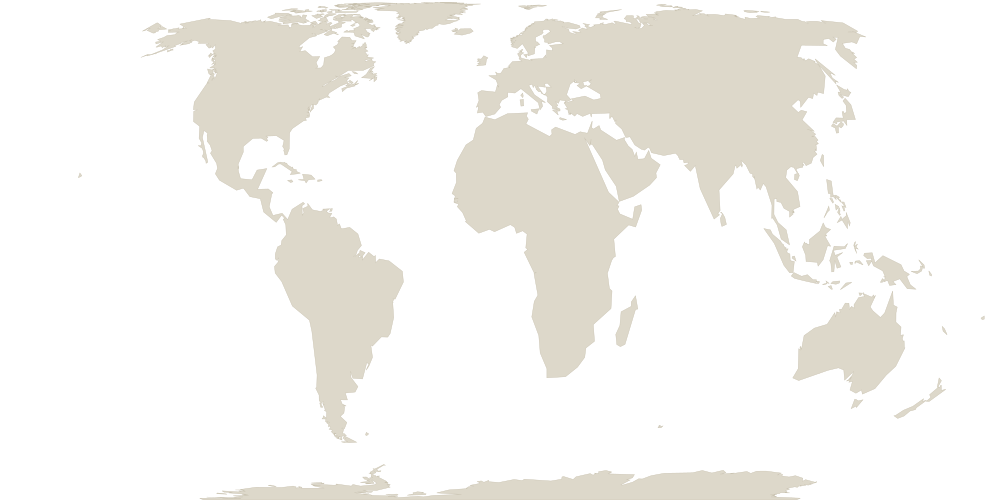
Regions where Artemisia campestris is native: Algeria, Libya, Morocco, Tunisia, Altay, Amur, Buryatiya, Chita, Iran, Iraq, Kamchatka, Khabarovsk, Krasnoyarsk, Kuril Is., Magadan, Mongolia, North Caucasus, Primorye, Sakhalin, Transcaucasus, Türkiye, West Siberia, Yakutiya, Albania, Austria, Baltic States, Belarus, Belgium, Bulgaria, Central European Russia, Czechia-Slovakia, Denmark, East European Russia, Finland, France, Germany, Great Britain, Greece, Hungary, Italy, Krym, Netherlands, North European Russia, Northwest European Russia, NW. Balkan Pen., Poland, Portugal, Romania, Sardegna, Sicilia, Spain, Sweden, Switzerland, Türkiye-in-Europe, Ukraine, Alaska, Alberta, Arizona, Arkansas, British Columbia, California, Colorado, Connecticut, Florida, Idaho, Illinois, Indiana, Iowa, Kansas, Labrador, Maine, Manitoba, Massachusetts, Mexico Northeast, Michigan, Minnesota, Mississippi, Missouri, Montana, Nebraska, Nevada, New Brunswick, New Hampshire, New Jersey, New Mexico, New York, Newfoundland, North Carolina, North Dakota, Northwest Territories, Nunavut, Ohio, Oklahoma, Ontario, Oregon, Pennsylvania, Québec, Rhode I., Saskatchewan, South Carolina, South Dakota, Texas, Utah, Vermont, Washington, Wisconsin, Wyoming, Yukon AlgeriaLibyaMoroccoTunisiaAltayAmurBuryatiyaChitaIranIraqKamchatkaKhabarovskKrasnoyarskMagadanMongoliaNorth CaucasusPrimoryeSakhalinTranscaucasusTürkiyeWest SiberiaYakutiyaAlbaniaAustriaBaltic StatesBelarusBelgiumBulgariaCentral European RussiaCzechia-SlovakiaDenmarkEast European RussiaFinlandFranceGermanyGreeceHungaryItalyKrymNetherlandsNorth European RussiaNorthwest European RussiaNW. Balkan Pen.PolandPortugalRomaniaSiciliaSpainSwedenSwitzerlandTürkiye-in-EuropeUkraineAlaskaAlbertaArizonaArkansasBritish ColumbiaCaliforniaColoradoConnecticutFloridaIdahoIllinoisIndianaIowaKansasLabradorMaineManitobaMassachusettsMexico NortheastMichiganMinnesotaMississippiMissouriMontanaNebraskaNevadaNew BrunswickNew HampshireNew JerseyNew MexicoNew YorkNewfoundlandNorth CarolinaNorth DakotaNorthwest TerritoriesNunavutOhioOklahomaOntarioOregonPennsylvaniaQuébecSaskatchewanSouth CarolinaSouth DakotaTexasUtahVermontWashingtonWisconsinWyomingYukon SardegnaRhode I.
Native distribution of Artemisia campestris, after Kew’s World Checklist of Vascular Plants. Introduced, extinct and doubtful records are excluded, so this is where the plant is from, not everywhere it now grows. Regions too small to draw at this scale are marked with a dot.
RegionTDWG codeContinent
Alaska ASK NORTHERN AMERICA
Alberta ABT
Arizona ARI
Arkansas ARK
British Columbia BRC
California CAL
Colorado COL
Connecticut CNT
Florida FLA
Idaho IDA
Illinois ILL
Indiana INI
Iowa IOW
Kansas KAN
Labrador LAB
Maine MAI
Manitoba MAN
Massachusetts MAS
Mexico Northeast MXE
Michigan MIC
Minnesota MIN
Mississippi MSI
Missouri MSO
Montana MNT
Nebraska NEB
Nevada NEV
New Brunswick NBR
New Hampshire NWH
New Jersey NWJ
New Mexico NWM
New York NWY
Newfoundland NFL
North Carolina NCA
North Dakota NDA
Northwest Territories NWT
Nunavut NUN
Ohio OHI
Oklahoma OKL
Ontario ONT
Oregon ORE
Pennsylvania PEN
Québec QUE
Rhode I. RHO
Saskatchewan SAS
South Carolina SCA
South Dakota SDA
Texas TEX
Utah UTA
Vermont VER
Washington WAS
Wisconsin WIS
Wyoming WYO
Yukon YUK
Albania ALB EUROPE
Austria AUT
Baltic States BLT
Belarus BLR
Belgium BGM
Bulgaria BUL
Central European Russia RUC
Czechia-Slovakia CZE
Denmark DEN
East European Russia RUE
Finland FIN
France FRA
Germany GER
Great Britain GRB
Greece GRC
Hungary HUN
Italy ITA
Krym KRY
Netherlands NET
North European Russia RUN
Northwest European Russia RUW
NW. Balkan Pen. YUG
Poland POL
Portugal POR
Romania ROM
Sardegna SAR
Sicilia SIC
Spain SPA
Sweden SWE
Switzerland SWI
Türkiye-in-Europe TUE
Ukraine UKR
Altay ALT ASIA-TEMPERATE
Amur AMU
Buryatiya BRY
Chita CTA
Iran IRN
Iraq IRQ
Kamchatka KAM
Khabarovsk KHA
Krasnoyarsk KRA
Kuril Is. KUR
Magadan MAG
Mongolia MON
North Caucasus NCS
Primorye PRM
Sakhalin SAK
Transcaucasus TCS
Türkiye TUR
West Siberia WSB
Yakutiya YAK
Algeria ALG AFRICA
Libya LBY
Morocco MOR
Tunisia TUN

Not drawn on the map: Kuril Is., Great Britain. We hold no public-domain boundary for these regions, so they are listed rather than guessed at.

Region boundaries approximated from Natural Earth (public domain) and mapped to TDWG World Geographical Scheme for Recording Plant Distributions (WGSRPD) level-3 botanical countries (Brummitt 2001). Indicative, not the official WGSRPD geometry.

Flowering 108 in flower of 466 examined

Proportion of examined Artemisia campestris in flower, by month
Month In flower Examined Share 95% interval
Jan 0 8 0% 0% to 32%
Feb 0 6 0% 0% to 39%
Mar 1 37 3% 0% to 14%
Apr 0 66 0% 0% to 6%
May 4 59 7% 3% to 16%
Jun 13 54 24% 15% to 37%
Jul 25 63 40% 29% to 52%
Aug 43 80 54% 43% to 64%
Sep 16 42 38% 25% to 53%
Oct 4 28 14% 6% to 31%
Nov 2 15 13% 4% to 38%
Dec 0 8 0% 0% to 32%

Peak flowering in Aug. Each bar is the share of Artemisia campestris observations in which someone actually recorded the reproductive state and found the plant in flower, not the raw number of flowering records. That distinction matters: people observe plants far more in spring than in winter, so a bare count of flowering records partly measures when people go outside. Dividing by the number examined removes that. 108 of 466 examined observations were in flower, every one of them research grade. The whisker on each bar is a 95% Wilson interval. This is still a global aggregate and not a forecast for your garden: the same species flowers on different dates in different hemispheres. Where a species has fewer than 30 flowering records we do not draw this chart at all. Computed from 10.15468/dl.cgje2x.

Also published as 111 synonyms

A synonym is not an error. It is a record of botanists disagreeing, in print, about where this plant belongs. Each of these was somebody’s considered answer.

  • Absinthium alpinum Besser
  • Absinthium boreale Besser
  • Absinthium congestum Lam.
  • Absinthium virescens Juss. ex Besser
  • Artemisia allionii Nyman
  • Artemisia alpina DC. ex Steud.
  • Artemisia argyrea (Jord. & Fourr.) O.Schwarz
  • Artemisia borealis Pall.
  • Artemisia borealis f. borealis
  • Artemisia borealis f. latisecta (Fernald) J.Rousseau
  • Artemisia borealis f. purshii (Besser ex Hook) J.Rousseau
  • Artemisia borealis subsp. adamsii (Besser) Leonova
  • Artemisia borealis subsp. nana (Gaudin) Wilcz. & Schinz
  • Artemisia borealis subsp. purshii (Besser ex Hook) Hultén
  • Artemisia borealis var. adamsii (Besser) T.G.Leonova
  • Artemisia borealis var. latisecta Fernald
  • Artemisia bothnica Lundstr. ex Nyman
  • Artemisia bottnica (Kindb.) Leonova
  • Artemisia campestris f. campestris
  • Artemisia campestris subsp. bothnica Lundstr. ex Kindb.
  • Artemisia campestris subsp. canescens Le Houér.
  • Artemisia campestris subsp. caudata (Michx.) H.M.Hall & Clem.
  • Artemisia campestris subsp. lloydii (Rouy) Cout.
  • Artemisia campestris subsp. sericea (Fr.) Lemke & Rothm.

and 87 more.

Sourcesevery claim on this page

  1. World Flora Online Plant List. accepted name, authority, classification. CC0. Retrieved 2026-07-12.
  2. iNaturalist. photographs and flowering annotations, CC0 / CC BY / CC BY-SA only. per photograph. Retrieved 2026-06-27.
  3. Wikidata. common name (P1843), joined on the World Flora Online identifier (P7715). CC0. Retrieved 2026-07-13.
  4. Kew, World Checklist of Vascular Plants (WCVP v16). native distribution by TDWG level-3 botanical country, and life form. CC BY 3.0. Retrieved 2026-06-04.

We publish what we can source and we say so when we cannot. This page has no care advice and no toxicity claim, because we do not yet have those from a source we can cite.